Sunday, March 18, 2007

Happiness and the Search

Check out continuing coverage about "happiness" in Scientific American. This is by Marina Krakovsky.

An experimental psychologist investigating the possibility of lasting happiness, Sonja Lyubomirsky understands far better than most of us the folly of pinning our hopes on a new car--or on any good fortune that comes our way. We tend to adapt, quickly returning to our usual level of happiness.


The classic example of such "hedonic adaptation" comes from a 1970s study of lottery winners, who a year after their windfall ended up no happier than nonwinners. Hedonic adaptation helps to explain why even changes in major life circumstances--such as income, marriage, physical health and where we live--do so little to boost our overall happiness. Not only that, but studies of twins and adoptees have shown that about 50 percent of each person's happiness is determined from birth.


This "genetic set point" alone makes the happiness glass look half empty, because any upward swing in happiness seems doomed to fall back to near your baseline.

Sunday, March 11, 2007

Graffiti's beauty - flickr gives us a look


A day for WendSight to look at graffiti on flickr. Thank you Brian from The Curse of Brian.

Friday, March 09, 2007

Spooky quantum link - photons fly far


The reach of the spooky quantum link called entanglement keeps getting longer. A team has transmitted entangled photons some 144 kilometers (89 miles), reports Scientific American.

The distance achieved is 10 times farther than entangled photons have ever flown through the air. When two photons or other particles are in this state, what happens to one determines the fate of the other, no matter how far apart they are. Physicist Anton Zeilinger compares the phenomenon with throwing a pair of dice that land on matching numbers every time.

Using a laser, the researchers created entangled pairs of photons on La Palma and fired one member of each pair to a European Space Agency (ESA) telescope on Tenerife, which had to make rapid, small adjustments to receive the photons, Zeilinger says. In another presentation, physicist Richard Hughes of Los Alamos National Laboratory described recent experiments in which his group fired a series of nonentangled photons 185 kilometers down a conventional optical fiber.

In both cases, researchers demonstrated that they could transmit randomly oriented, or polarized, photons, which are suitable for sending messages that cannot be intercepted without garbling the information. Called quantum keys, such transmissions could allow users to scramble messages in a way that is potentially unbreakable.

Saturday, February 24, 2007

Shortcut communications in today's world

A press release says that particularly among close associates, sharing even a little new information can slow down communication.

Some of people’s biggest problems with communication come in sharing new information with people they know well, newly published research at the University of Chicago shows.
Because they already share quite a bit of common knowledge, people often use short, ambiguous messages in talking with co-workers and spouses, and accordingly unintentionally create misunderstandings, said Boaz Keysar, Professor in Psychology at the University of Chicago.

"People are so used to talking with those with whom they already share a great deal of information, that when they have something really new to share, they often present it in away that assumes the person already knows it," said Keysar, who with graduate student Shali Wu tested Keysar’s communication theories and presented the results in an article, "The Effect of Information Overlap on Communication Effectiveness," published in the current issue of Cognitive Science.

"Sharing additional information reduces communication effectiveness precisely when there is an opportunity to inform—when people communicate information only they themselves know," the researchers said.

On a professional level, brief e-mails between colleagues can cause miscommunication, Keysar has learned from personal experience. "I once was scheduled to speak and had gotten the day of my talk mixed up. I received an e-mail from the host asking me if I was ok. I wrote back and said I was and didn’t find out until later that what he really wanted to know was where I was, as they were waiting for me to talk," Keysar said.

Thursday, February 22, 2007

Intelligent design under scrutiny

I have taken this from a press release on Eurekalert, issued by the University of Chicago - it was so interesting I am posting the whole release.

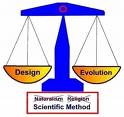
In a thought-provoking paper from the March issue of The Quarterly Review of Biology , Elliott Sober (University of Wisconsin) clearly discusses the problems with two standard criticisms of intelligent design: that it is unfalsifiable and that the many imperfect adaptations found in nature refute the hypothesis of intelligent design.

Biologists from Charles Darwin to Stephen Jay Gould have advanced this second type of argument. Stephen Jay Gould's well-known example of a trait of this type is the panda's thumb. If a truly intelligent designer were responsible for the panda, Gould argues, it would have provided a more useful tool than the stubby proto-thumb that pandas use to laboriously strip bamboo in order to eat it.

ID proponents have a ready reply to this objection. We do not know whether an intelligent designer intended for pandas to be able to efficiently strip bamboo. The "no designer worth his salt" argument assumes the designer would want pandas to have better eating implements, but the objection has no justification for this assumption. In addition, Sober points out, this criticism of ID also concedes that creationism is testable.

A second common criticism of ID is that it is untestable. To develop this point, scientists often turn to the philosopher Karl Popper's idea of falsifiability. According to Popper, a scientific statement must allow the possibility of an observation that would disprove it. For example, the statement "all swans are white" is falsifiable, since observing even one swan that isn't white would disprove it. Sober points out that this criterion entails that many ID statements are falsifiable; for example, the statement that an intelligent designer created the vertebrate eye entails that vertebrates have eyes, which is an observation.

This leads Sober to jettison the concept of falsifiability and to provide a different account of testability. "If ID is to be tested," he says, "it must be tested against one or more competing hypotheses." If the ID claim about the vertebrate eye is to be tested against the hypothesis that the vertebrate eye evolved by Darwinian processes, the question is whether there is an observation that can discriminate between the two. The observation that vertebrates have eyes cannot do this.

Sober also points out that criticism of a competing theory, such as evolution, is not in-and-of-itself a test of ID. Proponents of ID must construct a theory that makes its own predictions in order for the theory to be testable. To contend that evolutionary processes cannot produce "irreducibly complex" adaptations merely changes the subject, Sober argues.

"When scientific theories compete with each other, the usual pattern is that independently attested auxiliary propositions allow the theories to make predictions that disagree with each other," Sober writes. "No such auxiliary propositions allow … ID to do this."

In developing this idea, Sober makes use of ideas that the French philosopher Pierre Duhem developed in connection with physical theories – theories usually do not, all by themselves, make testable predictions. Rather, they do so only when supplemented with auxiliary information. For example, the laws of optics do not, by themselves, predict when eclipses will occur; they do so when independently justified claims about the positions of the earth, moon, and sun are taken into account.

Similarly, ID claims make predictions when they are supplemented by auxiliary claims. The problem is that these auxiliary assumptions about the putative designer's goals and abilities are not independently justified. Surprisingly, this is a point that several ID proponents concede.

Monday, February 12, 2007

Intel heads the pack on fast computing

Business Week reports that computing took a leap forward when chipmakers started putting more than one core, or central brain, on a single chip.

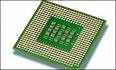
Chipmaker Intel says it has successfully produced a chip capable of processing 1 trillion calculations a second. The chip, which Intel claims is the fastest ever made, could start being used commercially in five years.

The huge processing power each chip would provide will dramatically change the the way we work and how we spend our leisure time. Financial analysis that takes days to perform in back offices could be done in seconds at a trader's terminal on Wall Street - says Business Week.

Sunday, February 04, 2007

Wired explores what we don't know

Is the universe actually made of information? I am taking the intro to this sub-section of Wired Magazine's wonderful section this month called "What we don't know" - check it out.

Humans have talked about atoms since the time of the ancients, and ever-smaller fundamental particles of matter followed. But no one even conceived of bits until the middle of the 20th century. The bit is a fundamental particle, too, but of different stuff altogether: information.

It is not just tiny, it is abstract - a flip-flop, a yes-or-no. Now that scientists are finally starting to understand information, they wonder whether it’s more fundamental than matter itself.

Perhaps the bit is the irreducible kernel of existence; if so, we have entered the information age in more ways than one.

Wired says the quantum pioneer John Archibald Wheeler, perhaps the last surviving collaborator of both Albert Einstein and Niels Bohr, poses this conundrum in oracular monosyllables: “It from bit.”

For Wheeler, it is both an unanswered question and a working hypothesis, the idea that information gives rise, as he writes, to “every it - every particle, every field of force, even the spacetime continuum itself.”

This is another way of fathoming the role of the observer, the quantum discovery that the outcome of an experiment is affected, or even determined, when it is observed. “What we call reality,” Wheeler writes coyly, “arises in the last analysis from the posing of yes-no questions.” He adds, “All things physical are information-theoretic in origin, and this is a participatory universe.”

Sunday, January 28, 2007

Nanotechnology gets spicy

Nanotechnology research is always intriguing - here are some Indian researchers working on helping deliver tumeric via nanos... I guess we will be using this technology for everything in the future!

From an article on nanowerk: The Chemistry Department at Delhi University has developed a nano-particular vehicle for helping turmeric get absorbed in the body.

“The nano-particular vehicle for turmeric which is being developed by experts at Delhi University is under testing in different in-vitro culture and animal modules and will finally be used for human trials,” said Dr. A.K. Dinda.

Turmeric has a therapeutic effect. The medicinal properties of turmeric, a spice commonly used in curries and other South Asian cuisine, have for millennia been known to the ancient Indians and have been expounded in the Ayurvedic texts. It is only in recent years that Western scientists have increasingly recognised the medicinal properties of turmeric.

Monday, January 15, 2007

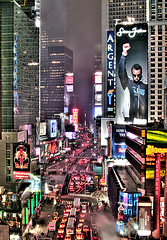
Times Square - ever facinating to see


itsNano - Never Sleeping

Photos of Times Square are always amazing to look at - like a jigsaw puzzle with 1000 tiny pieces assembled into a beautiful picture.

Theory of gravity and quantum field theories compared

I thought this meeting looked interesting - I am intriqued by the scope of it and new questions raised to understand Einstein's theory of gravity vs quantum field theories.

A press release says, "More than three dozen leading physicists and astrophysicists will convene for the conference, "Rethinking Gravity: from the Planck scale to the size of the Universe."

Scientists will meet to discuss their common goal - to probe and test gravity at all scales, from the subatomic level to the entire universe.

"Scientists have understood for several decades that Einstein's theory of gravity, which describes our universe at astronomical scales, is incompatible with quantum field theories, which describe phenomena at atomic scales," says physicist Dimitrios Psaltis. "Despite numerous efforts, scientists have yet to come up with a satisfactory quantum theory of gravity. But our quest has become intensely exciting for two reasons. First, new ideas are challenging our previous notions of how the gravitational force works and pervades spacetime itself. And second, it is astonishing to realize that even though most of these ideas were unheard of a mere decade ago, they can be tested using present-day astronomical and cosmological observations."

Monday, January 08, 2007

Scientists look at a fifth force of nature

Read on the Scientific American blog about the conference of the American Astronomical Society and hints of a fifth force of nature, on top of: electromagnetism, gravity, and the two forces that govern atomic nuclei. The idea of a fifth force has a checkered history, and experiments seem to rule it out. But those experiments apply only to ordinary matter. They say nothing about dark matter.

Dark matter is the unknown substance that provides the gravitational glue holding together large cosmic structures such as galaxies and clusters of galaxies. The poster child for dark matter, which got a lot of attention last summer, is the Bullet Cluster of galaxies. It is actually a pair of clusters that have rammed into each other. The center of mass of each cluster (pinpointed by seeing how the cluster affects light from bodies in back of it) is offset from the bulk of the ordinary matter -- so most of the mass of the clusters must be un-ordinary.

But its source could be vastly different -- the result, perhaps, of a property akin to electric charge which only dark matter possesses. Proposed new theories of physics such as string theory predict new energy fields that might generate novel forces, but in the past physicists have generally supposed that these forces would make themselves felt only over sub-subatomic distances.

Monday, December 18, 2006

Solar outburst aggravates global systems

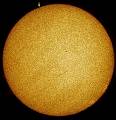
A press release this week says that a solar outburst, which can play havoc with global positioning systems and cell phone reception, bombarded Earth, Dec. 6, 2006, with a record amount of radio noise. Dale Gary, who just confirmed the news, is a professor and chair of the department of physics at New Jersey Institute of Technology.

"Reports of significant events worldwide are still coming in as late as yesterday afternoon," said Gary. Due to a computer software failure, initial research reports in the U.S. downplayed the outbursts.

"The odd thing about this outburst was that the Sun is supposed to be at the minimum phase of its 11-year cycle," said Gary. "Nevertheless, the disruption lasted more than an hour, produced a record amount of radio noise, and caused massive disruptions of Global Positioning Satellite (GPS) receivers world wide."

Sunday, November 19, 2006

Nanoparticles get drugs closer to the problem

Scientific American has covered the latest advance with nanoparticles for brain tumors. Researchers at the University of Michigan have tested a drug delivery system that involves drug-toting nanoparticles and a guiding peptide to target cancerous cells in the brain.

This study finds that using the nanoparticles the drug can be delivered to a tumor's general vicinity [reported in Clinical Cancer Research]. The researchers used a pharmaceutical called Photofrin, which is photodynamic, meaning it is activated by a laser after it has entered the bloodstream. This new system, which uses intravenous delivery of 40-nanometer-wide particles to carry the drug, may actually avoid much of the unwanted photosensitivity, because less Photofrin circulates in the bloodstream.
It also avoided crossing the blood-brain barrier, which keeps many substances from entering the brain from the bloodstream.

Sunday, November 05, 2006

Go to flickr for a great fall sky photo

There is a beautiful fall sky photo on flickr today, and other gorgeous fall photos, but they are copyrighted so I am sending you there to view them!

sky photo

Mercury eclipses the sun on Nov. 8

This kind of story makes me want to be a space scientist every time - I am either channeling an astrophysicist or just want to be one in my next life!

According to a press statement, "When Mercury goes in front of the Sun on Wednesday, Nov. 8, a rare event, scientists from Williams College and the University of Arizona will be observing it from vantage points on earthbound mountains and with orbiting spacecraft. Among planets, only Mercury and Venus can go in transit across the face of the Sun, as seen from the Earth, since they are the only planets whose orbits are inside that of Earth's. Transits of Mercury occur a dozen times a century, most recently in 2003. The next won't occur until 2016."

Background includes, "Scientists have already used the 1999 transit of Mercury to unravel a centuries-old mystery known as the black-drop effect. (Their analysis was published in the journal Icarus and in the proceedings of an International Astronomical Union symposium on the transit of Venus.) This blurring of the distinction between a planet's silhouette and the edge of the Sun prevented accurate knowledge of the size of the solar system for hundreds of years. It had been seen at the very rare transits of Venus, which occur in pairs separated by over a century, and often falsely attributed to Venus's atmosphere. Pasachoff and Schneider, on the other hand, by observing and explaining a black-drop effect at a transit of Mercury observed from NASA's TRACE spacecraft, showed that no atmosphere was necessary, since Mercury's atmosphere is negligible and the spacecraft was outside Earth's atmosphere."

See more: NASA Eclipse Page and Transit of Venus Page

Thursday, October 19, 2006

Parkinson's may include problems with touch

News from an Emory University press release says that although Parkinson's disease is most commonly viewed as a "movement disorder," scientists have found that the disease also causes widespread abnormalities in touch and vision.

Scientists studying Parkinson's disease previously have focused on the brain's motor and premotor cortex, but not the somatosensory or the visual cortex. But Emory neurologist Krish Sathian had earlier discovered, through tests of tactile ability, that these patients have sensory problems with touch.

Dr. Sathian believes the study shows that the traditional boundaries between brain systems involved in touch and vision, and between those involved in sensation and movement, are artificial constructs that break down with more in-depth study. From a practical standpoint, it shows that patients with PD and other movement disorders have considerable problems in addition to movement control.

Sunday, October 08, 2006

Scientific American Mind covers innovation

In a new report in Scientific American Mind, writers Guenther Knoblich and Michael Oellinger cover "The Eureka Moment." They pose, .... "people who possess the least possible knowledge are in the best position to crack the case. And, ... "Yet although knowledge and experience in the problem area are indispensable, they can be a hindrance if they become so fixed that they block new ideas."

Read more by going to Scientific American Mind online, but you will need to buy a subscription to read the whole article - the publication is worth much more than the low price.

Hubble finds 16 extrasolar planet candidates

I am intrigued by adventures and discovery in space, and this story attracted me. As I may have mentioned before, I hope to be an astrophysicist in my next life.

The European Space Agency says in a recent press release, "The NASA/ESA Hubble Space Telescope has discovered 16 extrasolar planet candidates that are orbiting a variety of distant stars. In accomplishing this, Hubble looked farther into our Milky Way galaxy than has ever successfully been done before in searching for extrasolar planets.

The Hubble observations reach all the way into the central bulge of our galaxy, 26,000 light-years away, or one-quarter the diameter of the Milky Way’s spiral disk.

This tally is consistent with the number of planets expected to be uncovered from such a distant survey, based on previous exoplanet detections made in our local solar neighbourhood that only encompasses six percent of the Milky Way’s disk.

Tuesday, September 26, 2006

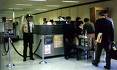
Study looks at security wait time in airports

I like how we study everything in the US with big studies at universities. Here is a study on security wait time in airports - seems mundane at first, but has some interesting facts including some socioeconomic factors.

A press release from Purdue says the "new study finds that people are willing to endure the wait for airport security screening, especially if delays are consistent among airports and at different times of day.

Findings also show that preferences vary between men and women, travelers in different income groups and other categories.

'The most fundamental finding was that wait time is important, but not the only major factor determining how well airline customers tolerate airport-security screening procedures,' said Fred Mannering, a professor of civil engineering at Purdue University. 'Another important finding is that passengers are more likely to be satisfied if wait times are consistent from airport to airport and at different times of day at the same airport.'

A paper detailing findings from the study appear in the Journal of Air Transportation Management.

The researchers used mathematical formulas in a "multinomial logit model" to calculate various probabilities based on data collected in national surveys. The surveys polled 828 air travelers in 2002 and 1,079 in 2003, after which the surveys were discontinued. The data were collected as part of the Omnibus Household Surveys, conducted every two months from January 2002 through October 2003 by the U.S. Bureau of Transportation Statistics.

The new study, however, suggests that travelers be surveyed annually because customer preferences may vary drastically from year to year.

Some specific probabilities detailed in the research paper regarding 2003 survey results showed that:

• Men were 3.9 percent less likely than women to be satisfied with the speed of airport-security screening;
• Passengers with a four-year college degree or a master's degree were 23 percent more likely to be satisfied;
• People earning more than $75,000 per year were 5 percent more likely to be satisfied; and
• Customers indicating that they were reluctant to travel after the Sept. 11 terrorist attacks were 17.9 percent less likely to be satisfied."

Saturday, September 09, 2006

Cancer genetic discovery breaks new ground

It is only a matter of time until genetic discoveries help in the prevention of disease - predictive health.

According to a study published in Science and covered by Healthday, researchers have sequenced the genetic "blueprints" of two major cancer killers - breast and colon cancer.

Identifying nearly 200 genes thought responsible for these diseases, the work gives researchers new insight into these malignancies and lays the foundation for the gene-targeted therapies that may one day cure them."Only by understanding this blueprint of cancer will we be fully able to understand the mechanism of what makes a cancer a cancer and to think about strategies for diagnosis, prevention and therapy," explained Dr. Victor Velculescu at Johns Hopkins University's Kimmel Cancer Center.

Just as the human body has its genetic code, so, too, do cancer cells. "Work from the past two decades has shown us that cancer is a genetic disease," said Velculescu.

He explained that a malignancy occurs when specific genes in healthy cells undergo unhealthy mutations. He says that the research approach holds great promise for providing an understanding of the genomic contributions to cancer. A mutation is really like a typo in a blueprint that's 3 billion letters long, according to the researcher.

Velculescu's team outlined the findings in the Sept. 8 issue of the journal Science.

A new $100 million federal initiative, The Cancer Genome Atlas project, seeks to change all that by mapping the myriad genetic "typos" that cause specific tumor types to form. The project described in Science is the first major step in that effort, according to the Healthday coverage.

Sunday, September 03, 2006

Berlin at night


Take a look at photos from flickr: Berlin at night.

Thursday, August 31, 2006

Orange juice for health

Sometimes people chuckle over the simplicity of a study the federal government supports, but when you think about this finding it really supports empowering individuals to manage their health.

Researchers, using a grant from the National Institutes of Health [does not look like the orange juice industry was behind this from what I can tell], found that a daily glass of orange juice can help prevent the recurrence of kidney stones better than other citrus fruit juices such as lemonade.

The findings indicate that although many people assume that all citrus fruit juices help prevent the formation of kidney stones, not all have the same effect. The study can be found in Clinical Journal of the American Society of Nephrology.

Press materials say that medically managing recurrent kidney stones requires dietary and lifestyle changes as well as treatment such as the addition of potassium citrate, which has been shown to lower the rate of new stone formation in patients with kidney stones.

Because some patients cannot tolerate potassium citrate because of gastrointestinal side effects, and in those cases, dietary sources of citrate, such as orange juice, may be considered as an alternative to pharmacological drugs.

Friday, August 25, 2006

Earth keeps balanced as weight changes

This captured my imagination, so I am sharing it with you!

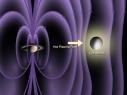
Imagine a shift in the Earth so profound that it could force our entire planet to spin on its side after a few million years, tilting it so far that Alaska would sit at the equator. Princeton scientists have now provided the first compelling evidence that this kind of major shift may have happened in our world's distant past.

By analyzing the magnetic composition of ancient sediments found in the remote Norwegian archipelago of Svalbard, Princeton has lent credence to a 140-year-old theory regarding the way the Earth might restore its own balance if an unequal distribution of weight ever developed in its interior or on its surface. Read more.

Monday, August 21, 2006

Marker signals whether chemo helps or not

Back to blogging about medical discovery... today researchers are gaining more information on specific cancers, and with this breast cancer finding doctors can better determine how to effectively treat women with chemotherapy.

According to a press release for a study reported in Cancer Research, about half of women whose breast cancer is treated with standard chemotherapy have their cancer return within five years. Most chemotherapeutic drugs have undesirable side effects, but there has been no way to predict who would benefit and who wouldn't. Fortunately, new research findings at the University of Southern California could change that. Researchers at the USC/Norris Comprehensive Cancer Center have discovered a new biological marker in tumors that can help indicate whether a woman's breast cancer will respond to the most commonly prescribed chemotherapy drugs.

Thursday, August 03, 2006

One more to take your breath away


powertothepixel

Maybe it is because I want to float...


Here you go - still pointing to some intriguing photography - I keep coming back to antimethod.

Wednesday, August 02, 2006

Open-source science - can you dig it?

According to a story from Chemical and Engineering News, "Scientists from Sydney to San Francisco have created an online research collaboration to develop cures for tropical diseases, using the 'open source' programming model that produced freeware like Linux and Firefox, the award-winning Web browser.

The motivation is straightforward: Tropical diseases are low priority for big pharma because the return on drug development is so small. Patients in developing nations just don't have the financial ability to pay for patented drugs.

The structure is radical: Online discussions will prioritize a list of experiments that anyone can take on. Raw data will be posted online and discussed. Members of the consortium will solicit further ideas and expertise, hoping the greater research community steps up to the plate.

The group, which operates under an umbrella website called Synaptic Leap, hopes that volunteered time, computer power, and reagents will eventually result in a portfolio of drug leads that will be made freely available for development. Currently, members of Synaptic Leap are describing projects online and asking others for help and advice.

Participants in open-source collaborations give up their ability to patent discoveries by definition, because their data are public as soon as they are posted. But some argue that when it comes to neglected diseases, there's nothing to lose, because there was never any income to gain."

Sunday, July 30, 2006

Looking at beauty in the city at night


Okay - so this is off the medical beat, but I am so enamored of the beautiful photography on flickr ... here is Kayode Okeyode with some London photos.

Tuesday, July 25, 2006

Photos of the earth

To view beautiful photographs of our earth - go to tricky (sovietyuk).

Saturday, July 22, 2006

A fun experiment with water bed testing

Watch this hilarious video on Google videos - the water bed.

Thursday, July 20, 2006

Does BMI really count for all?

This is the kind of report that you want to say "of course I pretty much figured this" - this is something intuitive.

For years doctors have used the body mass index (BMI), a ratio of height and weight, to characterize the clinical weight status of their patients. The lower the number, the presumption goes, the leaner the person, and anyone with a BMI above 30 is characterized as obese and at high risk for the associated complications.

But the BMI has come under scrutiny lately, and other techniques that measure how the weight is distributed on the body are thought to provide a better way to assess risk. Now a study in mice by scientists at The Jackson Laboratory indicates that the usefulness of the BMI is suspect even at the genetic level.

In research published in PLoS Genetics, researchers used a combination of computational, molecular, and genetic tools to identify locations on the mouse genome that influence adiposity (amount of body fat), overall body size and bone structure. Applying an analytical technique called "structural equation modeling" to the genetic and physical characteristics of mouse inbred crosses, the scientists went beyond the one-gene, one-trait approach to reveal the networks of effects created by the influence of multiple genes.

The scientists say they found strong evidence that a high weight is not necessarily directly associated with a high percentage of fat.

At the clinical level, the research suggests that more refined measurements are needed to distinguish individuals with a large body mass from those who are truly obese.

Monday, July 17, 2006

Nanowires coaxed from bacteria and bioengeering electrical devices

This is pretty amazing to think about!

When Yuri Gorby discovered that a microbe which transforms toxic metals can sprout tiny electrically conductive wires from its cell membrane, he reasoned this anatomical oddity and its metal-changing physiology must be related.

A colleague who had heard Gorby's presentation at a scientific meeting later reported that he, too, was able to coax nanowires from another so-called metal-reducing bacteria species and futher suggested the wires, called pili, could be used to bioengineer electrical devices.

It now turns out that not only are the wires and their ability to alter metal connected--but that many other bacteria, including species involved in fermentation and photosynthesis, can also form wires under a variety of environmental conditions.

"Earth appears to be hard-wired," said Gorby, staff scientist at the Department of Energy's Proceedings of the National Academy of Science.

Tuesday, July 04, 2006

Developing galaxy an under-luminous blob

On occasion it is fun to look outward to the stars and far beyond - today's story is about ever-developing galaxies.

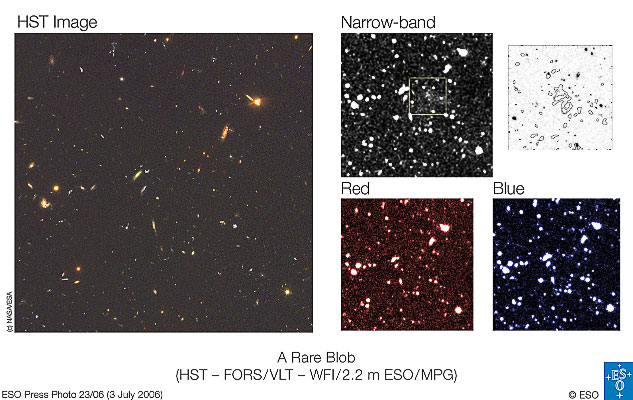
According to press materials, ESO's VLT has helped scientists to discover a large primordial 'blob', more than 10 billion light-years away. The most likely scenario to account for its existence and properties is that it represents the early stage in the formation of a galaxy, when gas falls onto a large clump of dark matter.

[ESO is the intergovernmental European research organisation for Astronomy in the Southern Hemisphere. It is supported by Belgium, Denmark, Finland, France, Germany, Italy, the Netherlands, Portugal, Sweden, Switzerland and the United Kingdom. VLT stands for very large telescope.]

Over the last few years, astronomers have discovered in the distant Universe a few so-called 'blobs'. These are rather energetic but under-luminous objects, of the size of or much larger than our Milky Way galaxy. Their exact nature is still unclear and several scenarios have been proposed to account for their existence.

An international team of astronomers have discovered a new 'blob' located at a distance of 11.6 billion light-years. It is thus seen as it was when the Universe was only 2 billion years old, or less than 15 percent its present age. The newly discovered object is located in the well-studied GOODS South field.

The blob is twice as big as our Milky Way and the total energy emitted is equivalent to that of about 2 billion suns. Despite this, the object is invisible in the images taken with various telescopes observing from the infrared to the X-ray wavebands, making it a very peculiar object. It is also the only such object found by the astronomers in their survey.

The research has been presented in a Letter to the Editor in the journal Astronomy and Astrophysics. To see spectacular photos visit this site.

Friday, June 30, 2006

Buffett gives Gates Foundation his wealth

What can I say - this news [in the Washington Post] gives me chills - the good kind:

"Investment guru Warren Buffett, whose stake in the company he founded is worth $44 billion, disclosed plans to give nearly all of it away, mostly to the world's largest charitable organization, the Bill & Melinda Gates Foundation.

"That revelation in Fortune magazine comes on the heels of Microsoft Corp. co-founder Bill Gates's announcement earlier this month that he would transition from running his company to running his foundation - and marks a golden age for philanthropic giving akin to that of a century ago, when industrialists such as Andrew Carnegie, John D. Rockefeller and Andrew W. Mellon gave vast amounts of their wealth to the arts and society."

Saturday, June 24, 2006

Electric signals - no wiring

New findings suggest that magnetic fields created using nanotechnology could make computers up to 500 times more powerful, if new research is successful.

The University of Bath is to lead an international £555,000 three-year project to develop a system which could cut out the need for wiring to carry electric currents in silicon chips.

Computers double in power every 18 months or so as scientists and engineers develop ways to make silicon chips smaller. But in the next few years they will hit a limit imposed by the need to use electric wiring, which weakens signals sent between computer components at high speed.

The new research project could produce a way of carrying electric signal without the need for wiring. Wi fi internet systems and mobile phones use wireless technology now, but the electronics that create and use wireless signals are too large to be used within individual microchips successfully.

The research project, which involves four universities in the UK and a university and research centre in Belgium and France, will look at ways of producing microwave energy on a small scale by firing electrons into magnetic fields produced in semi-conductors that are only a few atoms wide and are layered with magnets.

The process, called inverse electron spin resonance, uses the magnetic field to deflect electrons and to modify their magnetic direction. This creates oscillations of the electrons which makes them produce microwave energy. This can then be used to broadcast electric signals in free space without the weakening caused by wires.

Saturday, June 10, 2006

Vaccine for cervical cancer: behind the scenes

I am intrigued by the presentation of this research in this press release on Eurekalert!

"Creation of a successful vaccine against cervical cancer, approved today by the U.S. Food and Drug Administration, is the culmination of research that occurred thanks not only to scientists and physicians, but also to generous farmers and veterinarians, priests and nuns willing to tell all – and some very patient cows. At the University of Rochester Medical Center, the initial research more than 20 years ago included visits to veterinarians and meat-packaging plants in Upstate New York to collect scrapings from "prized" cow warts, and surveys of people unlikely to be infected with a sexually transmitted disease – priests and nuns who had taken a vow of celibacy. The work with the cows, the warts, the nuns and the priests illustrates how basic research can pay off in big and unexpected ways.

Will scoring improve in World Cup with new ball?

I enjoyed the stories in the news about the new football that is being used in the World Cup, so I am posting a press release from the University of Bath.

"The new football that will be used for the first time in the World Cup’s opening game on Friday (9 June 2006) is likely to bamboozle goalkeepers at some stage of the tournament, a leading scientist has warned.

The Adidas ‘Teamgeist’ football has just 14 panels - with fewer seams - making its surface ‘smoother’ than conventional footballs which have a 26 or 32 panel hexagon-based pattern.

This makes it aerodynamically closer to a baseball and, when hit with a slow spin, will make the ball less stable, giving it a more unpredictable trajectory in flight.

“With a very low spin rate, which occasionally happens in football, the panel pattern can have a big influence on the trajectory of the ball and make it more unpredictable for a goalkeeper,” said Dr Ken Bray, a sports scientist at the University of Bath and author of the new popular science book How to score – science and the beautiful game.

“Because the Teamgeist ball has just 14 panels it is aerodynamically more similar to the baseball which only has two panels.

“In baseball, pitchers often throw a ’curve ball’ which is similar to a swerving free kick and the rotating seam disrupts the air flow around the ball in much the same way as a football does.
“Occasionally though, pitchers will throw a ’knuckleball’ which bobs about randomly in flight and is very disconcerting for batters.

“It happens because pitchers throw the ball with very little spin and as the ball rotates lazily in the air, the seam disrupts the air flow around the ball at certain points on the surface, causing an unpredictable deflection.

“With the world’s best players in Germany this summer, there are bound to be plenty of spectacular scoring free kicks.

“But watch the slow motion replays to spot the rare occasions where the ball produces little or no rotation and where goalkeepers will frantically attempt to keep up with the ball’s chaotic flight path.”

The ball, which has been used by teams competing in the World Cup in practice sessions, has already been criticised by England goalkeeper Paul Robinson and Germany goalkeeper Jens Lehmann for its light-weight and unpredictable behaviour.

Sunday, June 04, 2006

Crater beneath Antarctic linked to meteor

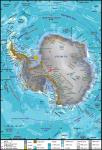
A new study press release planetary scientists have found evidence of a meteor impact much larger and earlier than the one that killed the dinosaurs - an impact that they believe caused the biggest mass extinction in Earth's history.

The 300-mile-wide crater lies hidden more than a mile beneath the East Antarctic Ice Sheet. And the gravity measurements that reveal its existence suggest that it could date back about 250 million years - the time of the Permian-Triassic extinction, when almost all animal life on Earth died out.

Its size and location - in the Wilkes Land region of East Antarctica, south of Australia - also suggest that it could have begun the breakup of the Gondwana supercontinent by creating the tectonic rift that pushed Australia northward.

Read more about this facinating discovery by Ohio State University researchers.

Saturday, June 03, 2006

Brain and computer chips advance

For the first time, scientists at the Max-Planck Institute for Biochemistry coupled living brain tissue to a chip equivalent to the chips that run computers, according to a report inJournal of Neurophysiology.

The scientists developed a revolutionary noninvasive technique that enables them to record neural communication between thousands of nervecells in the tissue of a brain slice with high spatial resolution. This technique involves culturing razor-thin slices of the hippocampus region on semiconductor chips.

The biophysicists were able to visualize the influence of pharmaceutical compounds on the neural network. This makes the “brain-chip” a novel test system for brain and drug research.

Saturday, May 27, 2006

Global warming getting attention

Watch the trailer for the new movie "An Inconvenient Truth," go to the movie, and decide for yourself if you want to make a commitment to addressing global warming. There are many ways to save the planet. Check out climatecrisis.net. Treehugger.com. EPA. Wikipedia on global warming. Global Warming.net. Watch global warming. New Scientist on climate change. Georgia Tech studies up.

Save the Internet: a bill for Network Neutrality

Today's news: A bipartisan majority on the House Judiciary Committee passed the "Internet Freedom and Nondiscrimination Act" - a good bill that would protect Network Neutrality and prohibit large phone and cable companies from turning the Internet into their private domain.
Yesterday's vote is a milestone in our campaign. It would have been unthinkable just four weeks ago - when we lost a vote on Net Neutrality in the House Energy and Commerce Committee.
In the weeks since that first vote, we have ignited a prairie fire across America. And Washington is beginning to feel the heat:

More than 700 groups from all 50 states are now a part of the SavetheInternet.com Coalition - a diverse list that includes MoveOn.org, the Christian Coalition, the Service Employees International Union (SEIU), Consumers Union and the American Library Association A-list musicians such as REM, Moby, The Roots and the Dixie Chicks have joined the coalition with many more to be announced soon.

Major U.S. newspapers have written editorials supporting our position. More than 5,000 bloggers have linked to the SavetheInternet.com Web site and blog - urging their readers to take action on this issue. And yesterday, the Coalition's petition drive surpassed 750,000 signatures. With little money and through the efforts of many, we have turned momentum against a handful of phone and cable giants that are spending untold millions of dollars to squash Internet freedom. But there is more work to do.

The full House will take up the bipartisan Judiciary bill in June. The Senate is also considering legislation that currently fails to protect Net Neutrality, though a bipartisan group of Senators are lining up behind an excellent bipartisan bill sponsored by Senators Olympia Snowe (R-Maine) and Byron Dorgan (D-North Dakota).

Stay tuned. Also read more on Wired - for an interesting story.

Thursday, May 25, 2006

MySpace meets Al Gore

According to Online Media Daily, former Vice President Al Gore and Paramount Classics today begin a broad partnership with MySpace to promote their climate change documentary, "An Inconvenient Truth."

"MySpace has a unique ability to mobilize its community around an urgent cause," Al Gore says.

MySpace's campaign for "An Inconvenient Truth" includes a custom-designed site where the community's more than 70 million registered members can meet and exchange ideas. Among other features, the page offers a "personal environmental impact calculator" for users to assess their personal contribution to global warming. The site also presents related facts and tips for reducing carbon emissions and living "green."

Wow - a fantastic use of MySpace!!

Wednesday, May 24, 2006

Points of light: gender and gait

Sometimes I like to comment on good writing in public relations for science, and this press release from Salk Institute captures my interest. Plus, the topic is intriguing and will make you think about your impressions of the gait of just about everyone you know!

It doesn't take John Wayne's deliberate, pigeon-toed swagger or Marilyn Monroe's famously wiggly sway to judge a person's gender based on the way they move. People are astonishingly accurate when asked to judge the gender of walking human figures, even when they are represented by 15 small dots of light attached to major joints of the body. And not only that, when human observers watched the walking motion of a male so-called "point light walker," they were more sensitive to the female attributes when watching the next figure in the sequence. This suggests that the human brain relies on specialized neurons that tell gender based on gait, report researchers at the Salk Institute for Biological Studies in the May 21 advance online edition of Nature Neuroscience.

Read more on Eurekalert.

Monday, May 22, 2006

Scientists' findings: levees during Katrina

Following an eight-month study of the New Orleans levee system and its performance during Hurricane Katrina, a 30-person team of researchers led by Raymond Seed and Robert Bea of the University of California, Berkeley, released a near-complete draft of their findings today in a "town hall" meeting in that Gulf Coast city.

Seed received two National Science Foundation grants to collect perishable data and to conduct an independent field investigation of the performance of the New Orleans levee systems with the intent the findings would prove vital for gauging the performance of levee systems distributed across the United States.

The levee study is one of more than 100 NSF supported in response to Hurricanes Katrina and Rita. For decades, the agency has supported field investigations following all manner of disasters, allowing researchers to travel the world to collect perishable data as soon as possible after an event. Read more.

Imagine whales on land - what once was

Researchers have revealed the genetic basis behind one of the best-documented examples of evolutionary change in the fossil record: how whales lost their hind limbs. Writing in this week's Proceedings of the National Academy of Sciences, scientists report that ancient whales - four-footed land animals not unlike large modern dogs - evolved into graceful, streamlined swimmers through a series of small genetic changes during the whales' embryonic development.

A gene called "Sonic Hedgehog," named by a creative scientist, was in effect between 41 million and 50 million years ago when whales' hind limbs shrank greatly as the former land animals began a return to the sea. But their legs showed no change in the basic arrangement and number of bones, which proved that Sonic Hedgehog was in effect. Read more great science findings at the National Science Foundation.

Senate bill aimed to protect Internet

Thanks goodness for the Snowe-Dorgan Bill, says Seana Mulcahy. It represents the "Internet Freedom Preservation Act of 2006.
This bipartisan bill was introduced in the Senate. Byron Dorgan (D-N.D.), Olympia Snowe (R-Maine). and Daniel Inouye (D-Hawaii). It aims to protect Network Neutrality. The bill defines the obligations of broadband providers in supplying the link between content providers and consumers. Read more on OnlineSpin.

Friday, May 12, 2006

Save the Internet campaign grows

You knew all the freedoms we have enjoyed on the Internet could be threatened by big business eventually - well, that day is here.

Congress is now pushing a law that would end the free and open Internet as we know it, according to the team of people across the nation working to "Save the Internet." The SavetheInternet.com Coalition now has 524 member organizations, 637,386 petition signatures to Congress, 3,251 blog links, and 5,634 MySpace friends. Read the the Coalition's blogs.

Major national Internet providers are lobbying Congress hard to gut Network Neutrality, the Internet's First Amendment, and the key to Internet freedom. Net Neutrality prevents major providers from choosing which websites open most easily for you based on which site pays the companies more. We do not want one company to have to outbid another for the right to work more properly on your computer.

Many members of Congress take campaign contributions from these companies, and they don't think the regualr people are paying attention to this issue. Join with others to ensure Internet neutrality - you can sign a petition today.

Thursday, May 11, 2006

Llamas, camels, and caffeine

I love this story for several reasons - one because it is so visual and interesting, and also because it is hard to imagine trying to avoid caffeine. But here's a snapshot from a press release on Eurekalert:

Three llamas and two camels have provided a way to tell whether your waiter swapped regular coffee for decaf in your after-dinner cup. Using the heat-resistant antibodies these camels and llamas make, researchers at Washington University School of Medicine in St. Louis are developing a quick test for caffeine that works even with hot beverages.

The researchers plan to adapt their technology to a simple test ("dipstick") that can be used to check for caffeine in a variety of drinks. Their research is in the journal Analytical Chemistry.

"We believe our test would be the first consumer test for caffeine and would be beneficial for anyone wishing to avoid caffeine for health or personal reasons," says senior author Jack H. Ladenson.

Tuesday, May 09, 2006

Gore: save our planet

I have to say that I respect Al Gore so much - and here is the latest in his effort on the global warming front:

He is helping to promote the documentary "An Inconvenient Truth." The film focuses on Gore's efforts to educate the public about global warming, an issue the former presidential candidate has spoken out on for years. The film shows photos of glaciers retreating and a host of charts and statistics chronicling the rise of water levels, worldwide temperatures and carbon dioxide levels, all symptoms of gradual warming of the earth, according to Gore.

Read the USA Today story.

Butterflies continue to face challenges

This article is not saying anything about global warming, but my intel says that California's weather is directly related to global warming.

States a press release from UC Davis, "Cold, wet conditions early in the year mean that 2006 is shaping up as the worst year for California's butterflies in almost four decades, according to Art Shapiro, professor of evolution and ecology at UC Davis.

That's a turnaround from last spring, when millions of painted lady butterflies migrated through the Central Valley. But other species have seen steep declines in recent years and could disappear from the region altogether.

'It has been the worst spring for butterflies of my 35 in California,' Shapiro said. 'There will probably be long-term repercussions, especially for species already in serious decline.'

Shapiro said that at most of his study sites, he is seeing half or less than half the number of species present at this time in an average year, and far fewer individual butterflies than usual. For example, at Gates Canyon near Vacaville he counted 10 species and 43 individuals on April 18, 2006. At the same site on April 19, 2005, he counted 21 species and 378 butterflies.

This winter's weather conditions may have a lot to do with the drop in numbers. The early winter was mild, with not enough cold to end the winter dormancy or 'diapause' of most butterflies, so they did not emerge to take advantage of early warm weather in February. Then March turned cold and wet, wiping out the breeding of species that had emerged."

Tuesday, May 02, 2006

Internet neutrality issues surface

A big issue on the horizon and getting a lot of attention is the concern for Internet neutrality or net neutrality. To understand the definition and the history and current congressional action, visit the Wikipedia.

States the Wikipedia entry on Net Neutrality: "By late 2005, network neutrality provisions were included in several Congressional draft bills, as a part of ongoing proposals to reform the Telecommunications Act of 1996. They would generally require internet providers to allow consumers access to any application, content, or service. However, important exceptions allow providers to discriminate for security purposes, or to offer specialized services like "broadband video" service.

On March 30, 2006 press release Rep. Fred Upton (Mich.) chaired a subcommittee hearing for a mark up of the Communications Opportunity, Promotion, and Efficiency Act of 2006 scheduled for April. Read more about the action in Congress in Business Week: "In a vote of 34 to 22, the House Committee on Energy & Commerce rejected an amendment to a sweeping telecommunications law, the Communications, Promotion, & Enhancement Act of 2006. The proposal, by Rep. Ed Markey (D-Mass.), would have given the Federal Communications Commission the power to prohibit discrimination when it comes to sending traffic over the Internet. In effect, the amendment would block the creation of a multilane "information highway," where network operators could give preference to their own content, or ensure speedier delivery to content providers that pay extra fees."

In April 2006 a large coalition of bi-partisan blogs and independent groups created Save The Internet, a fund-raising and political-action venue for endorsing the concepts of network neutrality. Within a week of its establishment, over 250 thousand signatures were delivered to Congress in favor of enshrining net neutrality as law."

Helping people understand this issue is going to take some time and effort - hope you will join the effort by joining Save The Internet.

Sunday, April 23, 2006

A constant of nature - can it change?

This is an facinating story I could not resist because I am intrigued with physicists and their contemplations.

According to a story in New Scientist, "Cosmologists claim to have found evidence that yet another fundamental constant of nature, called mu, may have changed over the last 12 billion years. If confirmed, the result could force some physicists to radically rethink their theories. It would also provide support for string theory, which predicts extra spatial dimensions. This is not the first time fundamental constants have been accused of changing over the lifetime of the universe. Most famously, there was controversy over the fine structure constant, alpha (α), which governs how light and electrons interact. Some physicists claimed it is changing while others said it was not."

Saturday, April 22, 2006

Device allows man to fiddle with traffic lights

This sounds like a something we would all love to do, but probably wouldn't.

According to an Associated Press story, "a man who said he bought a device that let him change traffic lights from red to green has received a $50 ticket on suspicion of interfering with a traffic signal."

The fellow given the ticket said that the device, which he bought on eBay for $100, helped him cut his time driving to work.

He used "a strobe-like device to change traffic signals because he said he ran late to the office frequently.

The AP continutes, "The device, called an Opticon, is similar to what firefighters use to change lights when they respond to emergencies. It emits an infrared pulse that receivers on the traffic lights pick up."

City traffic engineers noticed repeated traffic-light disruptions on certain intersections and noted the same vehicle when light patterns were disrupted.

Thursday, April 20, 2006

Cells talk in pairs - like people at the water cooler

I can't help but admire the public relations/scientist team that came up with this description to help people better understand cell communication:

"When a group of people tries to decide how to carry out an important task, it is sometimes said that the pivotal discussions do not happen in large, well-attended meetings, but in one-on-one conversations around the water cooler. It turns out that among individual neurons in our brains, the same may hold true.

"Likening the process to the sort of casual conversations one might have at a cocktail party, William Bialek and his research team have found that retinal ganglion cells, the nerve cells along the back of our eyes that transmit visual signals to the brain, organize their actions based on communications they have with other individual cells rather than on group-style discussions. The findings, derived from experiments with and mathematical models of groups of 40 cells in the retinas of salamanders, could shed light on how brain cells work as a team."

Sunday, April 16, 2006

Robots in unpredictable environments

The National Academy of Sciences is holding a symposium with its annual meeting to discuss robot technology.

According to its web site, "As robot technology advances, we are approaching the day when robots will be deployed prevalently in uncontrolled, unpredictable environments: the proverbial 'real world.' As this happens, it will be essential for these robots to be able to adapt autonomously to their changing environment. This session will present three examples of machine learning on physical robots: Peter Stone of the University of Texas at Austin will present a machine-learning approach to legged locomotion, with all training done on the physical robots; Brian Scassellati of Yale University will present research on humanoid robots that learn to use normal social cues to interact with people; and Ayanna Howard of the Georgia Institute of Technology will present research that focuses on space robotics, in which robust operations must occur in environments that are unknown, unexpected, and uncertain.

For interesting reading about robot technology, go to the BBC's The World and Science Daily.

Wednesday, April 12, 2006

Bionic man merges biology and electronics

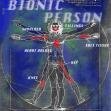
Recently at Experimental Biology 2006 some of the leading scientists in the rapidly expanding field of bionics explain how much of what was once fiction is today at least partial reality – including electronically-powered legs, arms, and eyes like those given TV’s Six Million Dollar Man 30-plus years ago.

The symposium on “The $6 Billion (Hu)Man” was part of the scientific program at the Experimental Biology 2006 meeting. Bionics, a word that merges biology with electronics, means replacing or enhancing anatomical structures or physiological processes with electronic or mechanical components Unlike prostheses, the bionic implant actually mimics the original function, sometimes surpassing the power of the original organ or other body part. Bionics takes place at the interface between bioengineering and anatomy.

Dr. William Craelius, Rutgers University, created the first multi-finger prosthesis, combining new understanding of musculoskeletal signaling with advances in human-to-machine communication. In recent years, prosthetic limbs have transformed from the unwieldy designs of the last century into more life-like limb substitutes that give users a more intuitive feel for their adopted limb. The bionic hand system (Dextra) produced by Dr. Craelius and his colleagues uses existing nerve pathways to control individual computer-driven mechanical fingers. Dextra consists of a standard plastic socket and silicone sensor sleeve that encases an amputee’s limb below the elbow. After a brief training period, operating the fingers is biomimetic, that is, it is done by normal volitional thinking, as if the user were commanding his natural fingers.

In Dr. Scott Delp’s Neuromuscular Biomechanics Laboratory at Stanford, digital humans walk across the computer screen, their visible musculoskeletal system revealing the complex interplay of muscles, bones, momentum and gravity that makes up human movement. A few alterations to the computer program that controls the form and function of these mechanisms, and the movements of the previously healthy, agile human on the screen change into those caused by neuromuscular disorders such as stroke, osteoarthritis, or Parkinson’s.

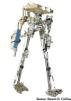
Dr. Homayoon Kazerooni, University of California, Berkeley, is the creator of BLEEX, a wearable robotic system that turns its wearer into a man or woman of incredible strength, able to carry up to 200 pounds with no more effort or strain than it would take to carry 10 pounds. Dr. Kazerooni started his work by understanding the human gait. Then, through the design of a novel actuation system, a network of sensors, a pair of computer controlled strap-on robotic legs, and an intelligent algorithm, he created the BLEEX to follow the wearer’s gait faithfully while carrying major loads. As the wearer walks and runs normally on ascending and descending slopes and stairs, the embedded sensors and computers in the robotic legs function like an extension of his or her own nervous system, gathering information on the direction being moved and continually redistributing the weight to make it feel like a barely perceptible burden.

Dr. Timothy Marler describes SantosTM, a new kind of complete whole-body virtual (computer-based) human model developed at the University of Iowa’s Virtual Soldier Research laboratory. Santos TM combines a highly realistic appearance, real-time simulations, and a relatively complex musculoskeletal structure. Because he will think, move, and act like a real human, he provides both an unique tool to scientists studying the human body and feedback to engineers who are designing and improving products. Unlike virtual mannequins, Santos actually predicts human motion and behavior based on human performance measures, such as energy, joint torque, or discomfort.

Cinnamon has health benefis

Reported recently are two studies presented at Experimental Biology 2006: They provide new evidence for the beneficial effects (and biochemical actions) of cinnamon as an anti-inflammatory agent and support earlier findings of its power as an anti-oxidant agent and an agent able to lower cholesterol, triglycerides, and glucose, and improve how well insulin functions.

In a related study, extracts of cloves also were found to improve the function of insulin and to lower glucose, total cholesterol, LDL and triglycerides in people with type 2 diabetes. The studies were presented at Experimental Biology 2006 and provide the first evidence of these beneficial effects in humans taking the equivalent of one to two cloves per day.

Earlier studies by Dr. Richard A. Anderson, Beltsville Human Nutrition Research Center, United States Department of Agriculture, had shown that the equivalent of a quarter to half a teaspoon of cinnamon given to humans twice a day decreased risk factors for diabetes and cardiovascular disease, including glucose, cholesterol and triglycerides, by 10 to 30 percent. These new studies showing cinnamon’s ability to block inflammation extend our understanding of the potential for the spice, says Dr. Anderson.

As an anti-inflammatory agent, cinnamon may be useful in preventing or mitigating arthritis as well as cardiovascular disease. And as scientists increasingly understand the relationship between inflammation and insulin function in Alzheimer’s (causing some to refer to the neurodegenerative disease as “type 3 diabetes”), cinnamon’s ability to block inflammation and enhance insulin function may make it useful in combating that disease as well.

Dr. Heping Cao of the Beltsville Human Nutrition Research Center and colleagues, including Dr. Anderson, investigated the biochemical basis for the insulin-like effects of cinnamon. Results showed that cinnamon, like insulin, increases the amount of three critically important proteins involved in the body’s insulin signaling, glucose transport, and inflammatory response. Dr. Cao says the study provides new biochemical evidence for the beneficial effects of cinnamon in potentiating insulin action and suggests anti-inflammatory properties for the antioxidants in cinnamon.