Friday, August 19, 2005

Blogging moves to business

You are going to learn alot more about science and medicine as more blogs are started on these topics, but this story today is more on the business of blogging.

Today I noticed a interesting article on Corante’s Get Real blog - on the business of blogs! Stowe Boyd says about writing blogs (and notice he has a book coming out):

"As the number of blogs and bloggers continues to double every three months, some paradoxical realities are beginning to show up. Like here, at Business Blog Summit, where I was puzzled to see that there is less and less maturity in the attendees: I don't mean that they are young, but that they are newbies. I mean, these folks don't know very much. And I am not knocking the conference folks. It's just simple numbers.

When you a show with an absolute number of attendees -- 200 or 250 attending -- and an additional 5 million blogs went live last quarter, and 10 million this quarter -- guess what? A lot more rank beginners are going to show up.

That also means that the time is right for advanced seminars and symposia to start, and that's where Corante will be pushing in the upcoming months. In an environment where six or seven of the folks speaking at this conference have "Business Blogging" books in press or in process, it is time for more specialization and depth. For example, I could see a conference dedicated just to the technical issues of blogging on Movable Type, or a one day Master Class on Blog Writing for non-newbies who want to dramatically improve the quality of their writing."

I guess it is time journalism schools started up classes on writing blogs....

Thursday, August 18, 2005

Support clean water around the world

Why don't you join fellow Americans and others around the globe in supporting CARE and its efforts to help address the issues of poverty around the world.

CARE operates 150 water projects in 43 countries around the world, working to expand access to safe water and help communities manage resources for future generations.

The House of Representatives recently acknowledged the importance of this work by introducing a piece of legislation that promotes access to safe water and sanitation across the globe: The Water for the Poor Act of 2005 (H.R.1973).

Find your member of Congress and make a difference by showing support for this bill as it makes its way to the House floor and a vote for final passage.

Contact CARE Action Network now.

Still searching for women in science

I have been around the medical and science world for a couple of decades, and this is one finding that seems to repeat: "Bias has created a significant barrier to women and under-represented groups from pursuing technological or scientific careers, according to the upcoming report "More Women in Science," published in the journal Science.

The research shows that for many fields, such as biology, the balance of men and women faculty is quite uneven despite the fact that women make up almost half of their graduating PhDs.

"Evidence shows that women faculty members are more often asked to provide campus service on committees and as student advisers, not necessarily the best activity to win tenure approval in Research I institutions," the press statement on Eurekalert states.

Essentially, the climate has always been challenging for women would-be scientists, and although progress has been made in small ways, much is left to do. Recently Georgia Tech developed a tool to help address this issue with a Web-based kit called Awareness of Decisions in Evaluating Promotion and Tenure as part of a National Science Foundation grant. This program is designed to help promotion and tenure committee members, chairpersons, and deans to better understand biases related to gender, race, and disability.

Although incremental steps may seem inadequate to tackle this major problem, at least the issue is still addressed in some way.

Wednesday, August 17, 2005

More on Yahoo Blog for Hope

I am reading more Yahoo Blog for Hope blogs today, and I have appreciated the thoughtful way celebrities are bringing attention to cancer.

I like the post by Tom Green, who had testicular cancer. He says, "When I noticed my cancer, I personally didn't go to the doctor right away. I waited about two weeks. But they say the average young person waits as much as six months, usually hoping it will go away, before going to a doctor. This is when the cancer can spread. If you feel any sort of pain, numbness, or whatever in your er... private area... just go to a doctor."

He reached out to young men with a program on MTV, and now he is again helping men learn about testicular cancer with his blog on Yahoo. Check it out!

Tuesday, August 16, 2005

Yahoo Blog for Hope

You should take a minute and visit the Yahoo Blog for Hope today - sponsored by Yahoo and the American Cancer Society!

I like Deepak Chopra, one of the bloggers and a well-known health guru, and here is a short excerpt from one of his entries: "The process of releasing emotional toxins is similar to that for releasing physical ones. You must first have a clear intention that you want to replace life-depleting emotions with life-enhancing ones. The metabolism of regret and resentment into compassion and forgiveness can dramatically awaken your body, mind, and spirit to you primordial vital energy."

His premise is always that a happy heart helps support a healthy body.

Monday, August 15, 2005

Emotional ads appeal to skeptics

I like this study on advertising claims and how people respond.

The study, reported in the Journal of Advertising, says that consumers who are very skeptical about the truth of advertising claims are more responsive to emotionally appealing ads than ones peppered with information. Emotional ads are characterized as providing an emotional experience that is relevant to the use of the brand; informational ads predominantly provide clear brand data.

The scientists looked at consumers' responses to advertising, including brand beliefs, responses to informational and emotional appeals, efforts to avoid advertising, attention to ads, and reliance on ads versus other information sources. They found that skeptical consumers like advertising less, rely on it less, and respond more positively to emotional appeals.

And I like this part in the press statement: "Skeptics are not, however, immune from the influence of advertising. The researchers said that this finding may appear counter-intuitive, as many consumers are inclined to express skepticism about overtly emotional ads, which they view as manipulative. And, such ads are successfully manipulative."

You can find more about the study "Ad skepticism: the consequences of disbelief" at the University of Washington web site.

Wednesday, August 10, 2005

Downy chick feathers and tufted branches

I am always facinated by researchers when they study for years at a time a very specific and undoubtedly esoteric question, and I continue to admire the patience it takes.

A study about how bird feathers are formed was reported in the prestigious journal Proceedings of the National Academy of Sciences this week.

In a previous study, according to the press statement (yes reporters are really interested in this stuff) John F. Fallon showed that Sonic hedgehog (Shh) and bone morphogenetic protein 2 (Bmp2) must be expressed in order to produce barb ridges, which are among the first structures to form in the tufted branches of the simple downy chick feather. The two proteins, which tend to play off each other in organ development, also are involved in the embryonic development of limbs, lungs, teeth and the gut.

In the current study, a team of scientists showed that "during the development of barbs-filamentous structures that form the feather, the function of these two proteins interact. SHH up-regulates its own expression and that of Bmp2, and Bmp2 then signals the down-regulation of Shh expression. This dynamic signaling interaction fits a longstanding mathematical model known as an activator-inhibitor mechanism," says the press statement.

Researchers say these findings suggest that simple relationships between developmental genes can provide the basis for the formation of complex forms. They predict that a more complicated version of the model can be applied to the formation of more complex feathers.

Bottom line: "Our model supports paleontologic evidence that pennaceous feathers are more advanced than plumalaceous feathers." I know, you are going to consider becoming a paleontologist after this exciting news!

Sunday, August 07, 2005

Choose your words wisely

A new study looks at "Do Speakers Avoid Ambiguities During Dialogue?" I was curious about the topic, but I found the press release could have been clearer in looking at ambiguities in public speaking!

It starts with an example: if someone told you to "put the apple in the basket on the table," what would you do? Depending on how many apples and baskets are in your kitchen, it might not be clear. Would you move the apple in the basket to the table, or move the apple to the basket on the table?

The researchers say some studies have shown that speakers choose their sentences based, in part, on how easy those sentences are to produce for themselves while not taking ease of comprehension into account.

"An ambiguous phrase is often easier to construct than an unambiguous one, so some people will speak ambiguously even if they are likely to be misunderstood," the statement says.

To learn more about "optional disambiguating words" you can read the full report in Psychological Science, a journal of the American Psychological Society.

What about my coverage of this report - hopefully not too ambiguous!

Friday, August 05, 2005

Driving breast cancer to the lungs

I don't cover basic science research in cancer all that much, but some news this week was significant when researchers pinpointed genes that drive the spread of breast cancer to the lungs.

Howard Hughes Medical Institute researchers have identified a telltale set of genes that causes breast cancer to spread and grow in the lungs, where cancer cells often flourish with lethal consequences.

The researchers say that the genes are more than markers that identify the presence of metastatic cancer. These genes are mediators that enable fragments of breast cancer tumors to take root in the lungs, according the HHMI press statement.

“It's all about selection, but it’s a combination of Darwin and Murphy," says the study's senior author Joan Massagué, at Memorial Sloan-Kettering Cancer Center. "These cells are mutating in a largely random fashion, so mutation that gives a cell an advantage will be selected for in a Darwinian manner. And like Murphy’s Law, if a cell can get nasty, it will get nasty.”

The scientists are hopeful that their research will give clinicians a new set of molecular tools to test tumor biopsies for the activity of these specific genes. This, in turn, should help guide treatment by permitting the early diagnosis of breast cancers that will ultimately metastasize to the lung.

Research that will undoubtedly be followed with more research.

Thursday, August 04, 2005

Art worth viewing today

One of my interests is new art, and the flickr web site points to amazing work I want to share today.

Go to flickr to see more of antimethod's inspiring and beautiful photography.

Ice shelf collapses in Antarctica

I must be developing a greater interest in global warming, or I am just coming across some amazing news (to me).

Today, scientists say that the Antarctic Peninsula is undergoing greater warming than almost anywhere on Earth, a condition that may be linked with human-induced greenhouse effects.

Says the journal Nature this week, "The spectacular collapse of Antarctica's Larsen B Ice Shelf, an area roughly the size of Rhode Island, is unprecedented during the past 10,000 years."

Here is the gist of it from a press statement: "Evidence shows that the break-up of the ice shelf was caused by a combination of long-term thinning (by a few tens of meters) over thousands of years and short term (multi-decadal) cumulative increases in surface air temperature that have exceeded the natural variation of regional climate during the Holocene period (the last 10,000 years since the end of the last Ice Age)."

Eugene Domack, professor of geosciences at Hamilton College, authors this new report. He says that the Larsen B ice shelf is not alone in its demise. In recent years, the Antarctic Peninsula has lost ice shelves totaling over 4,825 square miles.

According to the G8 Summit Gleneagles 2005 in July, our "climate is changing. Over the past century average global temperatures have risen by 0.6° Celsius – the 10 warmest years on record have all been since 1990. There is now scientific consensus that this warming has been brought about by the increase in greenhouse gases in the atmosphere, which in turn has been caused by human activities - primarily the burning of fossil fuels and changes in land use."

Something to think about.

Sunday, July 31, 2005

Response to advertising, the new frontier

This entry is back to my usual pursuits - how the brain works.

I stumbled on a new company that uses brain response measurement to aid the marketing industry. I am not promoting this company's services, but I am intrigued with the new twist.

Called Neuroco, this United Kingdom-based company launched to the marketing communications industry by combining brain science with conventional qualitative research.

The Neuroco web site says it is "a pioneer in the use of modern Electroencephalography (EEG) technology to measure human response to a broad range of marketing stimuli. Neuroco's leadership in the new science of Neuromarketing is due in large part to its in-house development of patented software capable of analysing and benchmarking brain patterns."

The company's execs say that by "totally re-assessing how consumers think, act, and behave towards brands, and delivering new and deeper layers of insight to guide marketing strategy, the new technology can transform the effectiveness of a company's marketing communications."

And this comment from its leadership intrigues: "To date, most Neuromarketing activity has used functional Magnetic Resonance Imaging (fMRI). To my mind this is a deeply flawed approach to monitoring brain function for Neuromarketing purposes. The environment is uncomfortable, noisy, and completely unnatural. Further the images produced represent only a snapshot of the brain's response at a specific moment in time. This significantly limits the understanding of what is happening across time, for example when watching a television commercial. In contrast, modern EEG equipment is small, light, unobtrusive, and easily portable, providing freedom to measure human response in a wide range of environments. It allows us to record and analyse brain activity on a second by second basis and so gain a remarkable insight into what's going on in people's minds."

The future looks like it will be filled with more biological examination of consumers' brains and discovering their wants and needs!

Saturday, July 30, 2005

Web site describes lab tests

I found a new web site today that is about lab tests and has very credible scientific groups partnering to present the information. Lab Tests Online is an excellent site, one to bookmark for the future.

The About This Site section reads: "The work of the clinical laboratory professional - who analyzes chemical indicators in the body to provide the doctor with a clearer picture of a patient's health - has long been an unseen aspect of health care. Yet, clinical lab tests often provide the link between the patient's presentation of symptoms and the doctor's diagnosis of and prescribed treatment for a particular condition or disease.

"Through preventative screening, lab tests also aid in the early detection of potentially fatal conditions, and in so doing, lead to early treatment. In short, lab tests can help both to save lives and to improve the quality of life."

Lab Tests Online has been designed to help patients and caregivers to better understand the many clinical lab tests that are part of routine care as well as diagnosis and treatment of a broad range of conditions and diseases.

Check it out!

Friday, July 29, 2005

Blue Brain Project: modeling the neocortex

Back to the topic of artificial intelligence - this is a new tweak to the saga.

IBM and The Ecole Polytechnique Fédérale de Lausanne are collaborating on a major joint research initiative, called Blue Brain Project, to use the huge computational capacity of IBM’s eServer Blue Gene supercomputer to create a detailed model of the circuitry in the neocortex – the largest and most complex part of the human brain.

By expanding the project to model other areas of the brain, scientists hope to eventually build an accurate, computer-based model of the entire brain, the press statement says.

And the project's relationship to future medical discovery: "Relatively little is actually known about how the brain works. Using the digital model scientists will run computer-based simulations of the brain at the molecular level, shedding light on internal processes such as thought, perception, and memory. Scientists also hope to understand more about how and why certain microcircuits in the brain malfunction – thought to be the cause of psychiatric disorders such as autism, schizophrenia, and depression."

Stay tuned!

Ice oceans reveal new life

Explorations of "ice oceans" and discovering never-before-seen life - I just had to look closer at this story released this afternoon - even though I am off on a science tangent not all that related to medical discovery.



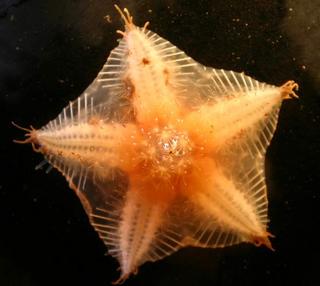
A historic expedition of Census of Marine Life explorers to the earth's most northern reaches has revealed a surprising density and diversity of Arctic Ocean creatures, some believed new to science, the scientists report.

Sheltered for millennia under a lid of ice currently one to 20 meters thick, unexpectedly high numbers and varieties of large Arctic jellies, squid, cod, and other animals have been found thriving in the extreme cold.

Scientists sailed aboard the US Coast Guard Cutter Healy and "returned to port with thousands of specimens from the Chukchi and Beaufort Seas and the Canada Basin, a vast bowl walled by steep ridges and lidded with ice," say the Census of Marine Life explorers.

“Modern technology has opened a window on this amazing world for the first time,” says scientist Dr. Russ Hopcroft of University of Alaska Fairbanks. “The imagery obtained of the mid-water and seafloor shows many life forms, such as soft bodied zooplankton, deep sea cucumbers and soft corals. The few explorers in this area before us had no adequate tools to collect or see these creatures."

This story has alot to do with marine evolution and something to do with concerns about the affects of global warming, as these scientists who traveled to the Artic say the planet's polar regions are uniquely vulnerable to the effects of global climate change.

And, again, catching the excitement from a scientist: "What continues to facinate and motivate us all is the chance to record species never known before, to accurately map their range and understand their rapidly-changing habitat."

Be sure to check out the link above for more fantastic photographs.

Thursday, July 28, 2005

Focus: is it tissue or is it snot?

I like the creative way this was communicated, so I decided to cover "Chronic sinus infection thought to be tissue issue, Mayo Clinic scientists show it's snot."

Mayo Clinic researchers have found that the cause of chronic sinus infections lies in the nasal mucus not in the nasal and sinus tissue targeted by standard treatment.

The findings will soon be published in the Journal of Allergy and Clinical Immunology, according to the Mayo Clinic press release.

The researchers say that physicians might need to take not only the tissue but also the mucus into account when trying to understand what causes chronic sinus infections and probably other airway diseases.

Chronic sinus infection is one of the most common chronic diseases in the United States, affecting 32 million adults, according to the National Center of Health Statistics. Chronic sinus infection produces nose and sinus problems characterized by stuffy nose, loss of sense of smell, postnasal drip, nasal discharge, and head and face pain lasting three months or longer.

"This has far-reaching implications," says lead researcher and Mayo Clinic ear, nose and throat specialist Dr. Jens Ponikau. "This suggests a beneficial effect in treatments that target primarily the underlying and presumably damage-inflicting nasal and sinus membrane inflammation, instead of the secondary bacterial infection that has been the primary target of treatments for the disease."

I really enjoy the enthusiasm each researcher has for her or his own work. So, today sinus tissue and snot take center stage!

Monday, July 25, 2005

Species-specific chromosomes after dinosaurs

Here's a quick note on an National Human Genome Research Institute discovery reported in Science - another gene story, but this one is animals and the knowledge will be translated to humans.

Researchers at the NHGRI have discovered that mammalian chromosomes have evolved by breaking at specific sites rather than randomly as long thought - and that many of the breakage hotspots are also involved in human cancer.

By aligning and comparing the mammals’ genetic material, or genomes, the team determined that chromosomes tend to break in the same places as species evolve, resulting in rearrangements of their DNA.

Chromosomal breakages, also referred to as translocations, are thought to be important in terms of evolution. In addition to their evolutionary implications, chromosomal translocations are known to contribute to the development or progression of many types of cancer.

Here is the part I am facinated with: Based on an analysis that included a computer-generated reconstruction of the genomes of long-extinct mammals, researchers found the rate of chromosomal evolution among mammals dramatically accelerated following the extinction of the dinosaurs about 65 million years ago.

Okay, so....

Says the NHGRI, "Before the sudden demise of dinosaurs and many other types of animals, which is thought to have resulted from a massive comet or asteroid striking Earth, mammals shared fairly similar body plans and also fairly similar genomes. Researchers speculate that the mass extinction opened new ecological niches for mammals, spurring their diversification and the emergence of new mammalian orders. This situation would have facilitated opportunities for the isolation of mammals into more distinct breeding groups, speeding the development of species-specific chromosomes."

“This study has revealed many hidden secrets on the nature and timing of genome evolution in mammals, and it demonstrates how the study of basic evolutionary processes can lead to new insights into the origin of human diseases,” says Harris A. Lewin, director of the Institute of Genomic Biology at the University of Illinois.

Sunday, July 24, 2005

Corn takes a new (old) shape

I wanted to share this story even though it really is not about medical discovery, but it is about genetics. I loved the photo, so I thought I would cover this. You can find more information at Eurekalert in a press release.

The story goes: "In 1909, while harvesting a typical corn crop (Zea mays) in Illinois, a field worker noticed a plant so unusual that it was initially believed to be a new species. Its "peculiarly shaped ear" was "laid aside as a curiosity" and the specimen was designated Zea ramosa."

Due to the alteration of a single gene, later named ramosa1, both the ear and the tassel of the plant were more highly branched than usual, leading to loose, crooked kernel rows and to a tassel that was far bushier than the tops of normal corn plants.

Now, researchers at Cold Spring Harbor Laboratory in New York have isolated the ramosa1 gene and shown how it controls the arrangement and length of flower-bearing branches in corn, related cereal crops, and ornamental grasses.

The study indicates that during the domestication of corn from its wild ancestor (teosinte), early farmers selected plants with special versions of the ramosa1 gene that suppressed branching in the ear, leading to the straight rows of kernels and the compact ears of modern-day corn on the cob.

Dr. Robert Martienssen, who led the study, says, "The ramosa1 gene appears to be a key player in the domestication of corn, and we've shown that it acts by signaling cells to form short rather than long branches."

The findings are described in the journal Nature.

Saturday, July 23, 2005

Alzheimer's finding promises

I keep finding stories related to the brain and how it functions, this just seems to be my favorite topic. Today I am looking at a news item that reflects the promise the future holds for bringing basic science into treatment.

The exciting news today, communicated on Eurekalert, is about three molecules scientists have discovered out of 58,000 compounds that appear to inhibit a key catalyst of Alzheimer's disease.

Each of the three molecules they found protects the protein called "tau," which becomes amazingly tangled in the brains of patients with Alzheimer's.

The scientists say that the neurofibrillary tangles of neurons in the brain, along with senile plaques, characterize Alzheimer's disease. The tangles are made of "tau," a protein that is also present normally in the brain.

In terms of future directions, Ken Kosik, co-director of the Neuroscience Research Institute at the University of California, Santa Barbara, says "There is lots to do here, lab testing, testing in animals, etc. But we have made an important step forward toward developing treatments for this disease."

More information on this finding can be found in the journal Chemistry & Biology.

Honestly, once this gets into more detail I cannot keep up with the science, but I am facinated with the kind of knowledge the researchers gain and the level of detail of these molecular findings. I appreciate the patience scientists have and the amount of time spent in the lab to dig this deep.

Sunday, July 17, 2005

Medical device approved for depression

I thought I would mention that a pacemaker-like treatment for depression finally made it through a lengthy approval process by the FDA.

The Cyberonics' vagus nerve stimulation, or VNS, device for what is called "treatment-resistant depression" is the first implantable device approved in the US for treatment of depression.

The FDA has approved this device for chronic depression for adults who are experience a major depressive episode and have not had a good response to four or more antidepressant treatments, according to the press statement.

This device is actually implanted just under the skin in the left chest area. It sends mild, intermittent electrical impulses through a wire to the left vagus nerve, which in turn sends signals to the brain.

The cost is about $20,000 for the device and implantation. The device is already approved for epilepsy and has been implanted in over 30,000 patients.

Experts say this type of device will help with treatment adherence, which can be a challenge for depressed patients.

Implantable devices for various medical problems have been in use for decades, and this technology has final found a place for helping treat depression.