Monday, April 30, 2007

Runners change faulty gait to reduce shock

Experimental Biology 2007 update:

More than seven out of 10 runners will sustain an injury over the course of a year, many of these injuries preventable without any adverse effects on running distance or performance, according to Dr. Irene Davis, director of the Running Injury Lab at the University of Delaware, and director of Research for Drayer Physical Therapy Institute.

In earlier studies, Dr. Davis identified the specific gait mechanics associated with common injuries. Now, in a study reported at the Experimental Biology meeting in Washington, DC, she explains how she successfully retrained runners to change their faulty gaits in eight half hour sessions, reducing leg shock by 50 percent and completely eliminating pain under the kneecap.

Her Experimental Biology presentation on April 30 is part of the scientific program of the American Association of Anatomists.

In the laboratory, Dr. Davis uses sophisticated biofeedback devices and monitors, but she says she does similar - and also effective - retraining in the physical therapy clinic at the University of Delaware using basic mechanical information, mirrors and advice to listen to the sound of one’s own feet hitting the ground.

The two studies underway in Dr. Davis' laboratory now are with runners who were selected for the study because they were experiencing or had been identified as high risk for one of the two most common running-related injuries: tibial stress fractures (microfractures of the lower leg bone) and patellofemoral pain syndrome (pain under the kneecap).

Coffee linked to risk reduction in some diseases

Today's update from Experimental Biology 2007:

Coffee is among the most widely consumed beverages in the world, and a scientist at the EB meeting says that the preponderance of scientific evidence - some by the panelists - suggests that moderate coffee consumption (3-5 cups per day) may be associated with reduced risk of certain disease conditions, such as Parkinson’s disease. The American Society for Nutrition’s popular “controversy session” was presented at the meeting.

Some research in neuropharamacology suggests that one cup of coffee can halve the risk of Parkinson’s disease. Other studies have found it reduces the risk of Alzheimer's disease, kidney stones, gallstones, depression and even suicide.

A second scientist discussed the link between diet and the development of type 2 diabetes. Worldwide, an estimated 171 million persons have diabetes, mostly type 2 diabetes, and an alarming increase to 366 million persons is expected for the year 2030. While increased physical activity and restriction of energy intake can substantially reduce risk of type 2 diabetes, he believes insight into the role of other lifestyle factors may contribute to additional prevention strategies for type 2 diabetes.

Sunday, April 29, 2007

Free weight training helps rotator cuff injuries

News from Experimental Biology 2007:

Resistance training, some of it job-specific, was successful in getting 90 percent of workers with severe rotator cuff injuries back to work, the majority (75 percent) at their previous job, after traditional physical therapy had failed to do so. Furthermore, all but one of the 42 employees in the study (98 percent) reported satisfaction with the resistance-training program and its outcome.

Dr. Jamie Stark described this and five related studies of workers suffering work-related rotator cuff and lumbar fusion injuries April 29. His presentations were part of the scientific program of The American Physiological Society.

Participants in the rotator cuff study represent a class of “worse-case-scenarios” of work-related injuries. Rotator cuff injuries involve those muscles and tendons that stabilize the shoulder and can be caused by pulling the arm out of place, by falls and other accidents. All 42 of the employees had been through surgery to repair their torn muscles or ligaments. All had already gone through weeks of traditional rehabilitation and physical therapy. Even so, none had been judged capable of going back to work and thus were eligible for disability and workmen’s compensation settlements.

Dr. Stark says, “We are at a new era in which we can develop standardized exercise prescriptions that produce desired, achievable functional goals.”

Saturday, April 28, 2007

Experimental Biology 2007 Underway

More than 12,000 biological and biomedical scientists will gather for the Experimental Biology 2007 meeting at the Washington Convention Center, Washington, DC, April 28 through May 2.

This annual meeting brings together scientists from dozens of different disciplines, from laboratory to translational to clinical research, from throughout the United States and the world.

Through thousands of lectures, symposia, research presentations, and exhibits, Experimental Biology provides scientists and clinicians an unparalleled opportunity to step outside the boundaries of their own fields and share information with colleagues looking at similar biomedical problems through the lens of different disciplines. The meeting also offers a wide spectrum of professional development for scientists, as listed below.

The theme of this year’s meeting, “Today’s Research: Tomorrow’s Health,” speaks to Experimental Biology’s mission to share the newest scientific concepts and research findings shaping future and current clinical advances.

The six sponsoring societies for Experimental Biology 2007 are: American Association of Anatomists (AAA); American Society for Biochemistry and Molecular Biology (ASBMB); American Society for Nutrition, Inc. (ASN); American Society for Investigative Pathology (ASIP); American Society for Pharmacology and Experimental Therapeutics (ASPET); and The American Physiological Society (APS). Experimental Biology includes the annual meetings of all sponsoring societies.

Eighteen U.S. and international guest societies further broaden the scope of the meeting, adding expertise in biomedical engineering, behavioral pharmacology, veterinary pathology, biological chemistry, informatics and other areas of investigation.

Monday, April 09, 2007

Bioscrypt's 3D Device Recognizes Your Face

A blog called Notes from the Digital Frontier says: "Bioscrypt, a Toronto-based company who has pioneered the field of visual recognition and authentication, has developed a new product to use a users’ face as the access control tool.

This new webcam-type device utilizes 3D face recognition technology to authenticate users. So in order to access someone else’s computer, I simply need to make a rubber mask of their face, right?

Maybe it’s not quite that easy. Bioscrypt has developed their system to use 40,000 points of recognition in a 3D mesh. It will also accommodate varying head positions and a wide range of lighting conditions. But just how accurate can this technology be?

I have doubts that this technology could recognize my face on a fairly consistent basis without telling me that I am not an authorized user. And what happens if I my facial expression is different from uninterested and mundane expression that has been recorded in the database? Will the system be able to tell the difference?"

Read more.

Sunday, April 08, 2007

Physicist Quantifies Poker Tournament

I enjoy looking at the intersection of physics and everyday matters, such as this story in Scientific American by Christopher Mims:

Clément Sire isn't just a statistical physicist -he's also a champion bridge player. Combining his love of physics and games, he has created a model of the poker variant Texas hold 'em that enables him to do everything from predicting the length of a tournament to figuring out his ranking simply by assessing the average size of his opponents' fortunes.

It may seem like an odd way to spend his time. After all, isn't physics supposed to be about particle colliders and superconductivity? "Physicists," Sire explains, "are now more than ever involved in the study of complex systems that do not belong to the traditional realm of their science."
Poker is an especially attractive subject, because it's one of the few truly isolated systems. Unlike, say, the stock market, which is often governed by factors such as politics, war and weather, poker tournaments are not affected by external phenomena. As a result, even Sire's simplified model of Texas hold 'em appears to mathematically express many features of the game that experienced players would recognize.

It turns out that the distribution of the "stack," or fortune, of the chip leaders across tournaments mirrors the pattern found in the distribution of maximum temperatures during every August in history or countless other natural phenomena where physicists have attempted to predict the nature of extreme values. This pattern, called the Gumbel distribution, means that the frequency with which chip leaders accrue fortunes of any given size is, in a way, a natural phenomenon that arises as much from the characteristics of the game being played as from the dispositions and abilities of those playing it.

Sunday, April 01, 2007

Memories, past lives and recollection

I like to check out Scientific American every week - it has the most interesting and innovative coverage of science and medicine, and the best writing.

Today's list of stories includes one on memories, so I have pulled the first of it and you can read the whole story at Scientific American.

Says SciAm: Do you sometimes have memories of a mysterious past life? Recall odd experiences such as being abducted by aliens? Wonder where these memories come from and if, in fact, you were really once whisked off in a flying saucer by ETs?

Seems the answer may be simpler than you think—or remember. A new study shows that people with memories of past lives are more likely than others to misremember the source of any given piece of information.

Study author Maarten Peters of Maastricht University in the Netherlands tested patients of "reincarnation therapists," who use hypnosis to help their patients remember "past lives," which the clients believe are at the root of their current problems.

"Once familiarity of an event is achieved, this can relatively easily be converted into a belief that the event did take place," Peters says. "A next possible step is that individuals interpret their thoughts and fantasies about the fictitious event as real memories."

Sunday, March 18, 2007

Happiness and the Search

Check out continuing coverage about "happiness" in Scientific American. This is by Marina Krakovsky.

An experimental psychologist investigating the possibility of lasting happiness, Sonja Lyubomirsky understands far better than most of us the folly of pinning our hopes on a new car--or on any good fortune that comes our way. We tend to adapt, quickly returning to our usual level of happiness.


The classic example of such "hedonic adaptation" comes from a 1970s study of lottery winners, who a year after their windfall ended up no happier than nonwinners. Hedonic adaptation helps to explain why even changes in major life circumstances--such as income, marriage, physical health and where we live--do so little to boost our overall happiness. Not only that, but studies of twins and adoptees have shown that about 50 percent of each person's happiness is determined from birth.


This "genetic set point" alone makes the happiness glass look half empty, because any upward swing in happiness seems doomed to fall back to near your baseline.

Sunday, March 11, 2007

Graffiti's beauty - flickr gives us a look


A day for WendSight to look at graffiti on flickr. Thank you Brian from The Curse of Brian.

Friday, March 09, 2007

Spooky quantum link - photons fly far


The reach of the spooky quantum link called entanglement keeps getting longer. A team has transmitted entangled photons some 144 kilometers (89 miles), reports Scientific American.

The distance achieved is 10 times farther than entangled photons have ever flown through the air. When two photons or other particles are in this state, what happens to one determines the fate of the other, no matter how far apart they are. Physicist Anton Zeilinger compares the phenomenon with throwing a pair of dice that land on matching numbers every time.

Using a laser, the researchers created entangled pairs of photons on La Palma and fired one member of each pair to a European Space Agency (ESA) telescope on Tenerife, which had to make rapid, small adjustments to receive the photons, Zeilinger says. In another presentation, physicist Richard Hughes of Los Alamos National Laboratory described recent experiments in which his group fired a series of nonentangled photons 185 kilometers down a conventional optical fiber.

In both cases, researchers demonstrated that they could transmit randomly oriented, or polarized, photons, which are suitable for sending messages that cannot be intercepted without garbling the information. Called quantum keys, such transmissions could allow users to scramble messages in a way that is potentially unbreakable.

Saturday, February 24, 2007

Shortcut communications in today's world

A press release says that particularly among close associates, sharing even a little new information can slow down communication.

Some of people’s biggest problems with communication come in sharing new information with people they know well, newly published research at the University of Chicago shows.
Because they already share quite a bit of common knowledge, people often use short, ambiguous messages in talking with co-workers and spouses, and accordingly unintentionally create misunderstandings, said Boaz Keysar, Professor in Psychology at the University of Chicago.

"People are so used to talking with those with whom they already share a great deal of information, that when they have something really new to share, they often present it in away that assumes the person already knows it," said Keysar, who with graduate student Shali Wu tested Keysar’s communication theories and presented the results in an article, "The Effect of Information Overlap on Communication Effectiveness," published in the current issue of Cognitive Science.

"Sharing additional information reduces communication effectiveness precisely when there is an opportunity to inform—when people communicate information only they themselves know," the researchers said.

On a professional level, brief e-mails between colleagues can cause miscommunication, Keysar has learned from personal experience. "I once was scheduled to speak and had gotten the day of my talk mixed up. I received an e-mail from the host asking me if I was ok. I wrote back and said I was and didn’t find out until later that what he really wanted to know was where I was, as they were waiting for me to talk," Keysar said.

Thursday, February 22, 2007

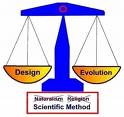
Intelligent design under scrutiny

I have taken this from a press release on Eurekalert, issued by the University of Chicago - it was so interesting I am posting the whole release.

In a thought-provoking paper from the March issue of The Quarterly Review of Biology , Elliott Sober (University of Wisconsin) clearly discusses the problems with two standard criticisms of intelligent design: that it is unfalsifiable and that the many imperfect adaptations found in nature refute the hypothesis of intelligent design.

Biologists from Charles Darwin to Stephen Jay Gould have advanced this second type of argument. Stephen Jay Gould's well-known example of a trait of this type is the panda's thumb. If a truly intelligent designer were responsible for the panda, Gould argues, it would have provided a more useful tool than the stubby proto-thumb that pandas use to laboriously strip bamboo in order to eat it.

ID proponents have a ready reply to this objection. We do not know whether an intelligent designer intended for pandas to be able to efficiently strip bamboo. The "no designer worth his salt" argument assumes the designer would want pandas to have better eating implements, but the objection has no justification for this assumption. In addition, Sober points out, this criticism of ID also concedes that creationism is testable.

A second common criticism of ID is that it is untestable. To develop this point, scientists often turn to the philosopher Karl Popper's idea of falsifiability. According to Popper, a scientific statement must allow the possibility of an observation that would disprove it. For example, the statement "all swans are white" is falsifiable, since observing even one swan that isn't white would disprove it. Sober points out that this criterion entails that many ID statements are falsifiable; for example, the statement that an intelligent designer created the vertebrate eye entails that vertebrates have eyes, which is an observation.

This leads Sober to jettison the concept of falsifiability and to provide a different account of testability. "If ID is to be tested," he says, "it must be tested against one or more competing hypotheses." If the ID claim about the vertebrate eye is to be tested against the hypothesis that the vertebrate eye evolved by Darwinian processes, the question is whether there is an observation that can discriminate between the two. The observation that vertebrates have eyes cannot do this.

Sober also points out that criticism of a competing theory, such as evolution, is not in-and-of-itself a test of ID. Proponents of ID must construct a theory that makes its own predictions in order for the theory to be testable. To contend that evolutionary processes cannot produce "irreducibly complex" adaptations merely changes the subject, Sober argues.

"When scientific theories compete with each other, the usual pattern is that independently attested auxiliary propositions allow the theories to make predictions that disagree with each other," Sober writes. "No such auxiliary propositions allow … ID to do this."

In developing this idea, Sober makes use of ideas that the French philosopher Pierre Duhem developed in connection with physical theories – theories usually do not, all by themselves, make testable predictions. Rather, they do so only when supplemented with auxiliary information. For example, the laws of optics do not, by themselves, predict when eclipses will occur; they do so when independently justified claims about the positions of the earth, moon, and sun are taken into account.

Similarly, ID claims make predictions when they are supplemented by auxiliary claims. The problem is that these auxiliary assumptions about the putative designer's goals and abilities are not independently justified. Surprisingly, this is a point that several ID proponents concede.

Monday, February 12, 2007

Intel heads the pack on fast computing

Business Week reports that computing took a leap forward when chipmakers started putting more than one core, or central brain, on a single chip.

Chipmaker Intel says it has successfully produced a chip capable of processing 1 trillion calculations a second. The chip, which Intel claims is the fastest ever made, could start being used commercially in five years.

The huge processing power each chip would provide will dramatically change the the way we work and how we spend our leisure time. Financial analysis that takes days to perform in back offices could be done in seconds at a trader's terminal on Wall Street - says Business Week.

Sunday, February 04, 2007

Wired explores what we don't know

Is the universe actually made of information? I am taking the intro to this sub-section of Wired Magazine's wonderful section this month called "What we don't know" - check it out.

Humans have talked about atoms since the time of the ancients, and ever-smaller fundamental particles of matter followed. But no one even conceived of bits until the middle of the 20th century. The bit is a fundamental particle, too, but of different stuff altogether: information.

It is not just tiny, it is abstract - a flip-flop, a yes-or-no. Now that scientists are finally starting to understand information, they wonder whether it’s more fundamental than matter itself.

Perhaps the bit is the irreducible kernel of existence; if so, we have entered the information age in more ways than one.

Wired says the quantum pioneer John Archibald Wheeler, perhaps the last surviving collaborator of both Albert Einstein and Niels Bohr, poses this conundrum in oracular monosyllables: “It from bit.”

For Wheeler, it is both an unanswered question and a working hypothesis, the idea that information gives rise, as he writes, to “every it - every particle, every field of force, even the spacetime continuum itself.”

This is another way of fathoming the role of the observer, the quantum discovery that the outcome of an experiment is affected, or even determined, when it is observed. “What we call reality,” Wheeler writes coyly, “arises in the last analysis from the posing of yes-no questions.” He adds, “All things physical are information-theoretic in origin, and this is a participatory universe.”

Sunday, January 28, 2007

Nanotechnology gets spicy

Nanotechnology research is always intriguing - here are some Indian researchers working on helping deliver tumeric via nanos... I guess we will be using this technology for everything in the future!

From an article on nanowerk: The Chemistry Department at Delhi University has developed a nano-particular vehicle for helping turmeric get absorbed in the body.

“The nano-particular vehicle for turmeric which is being developed by experts at Delhi University is under testing in different in-vitro culture and animal modules and will finally be used for human trials,” said Dr. A.K. Dinda.

Turmeric has a therapeutic effect. The medicinal properties of turmeric, a spice commonly used in curries and other South Asian cuisine, have for millennia been known to the ancient Indians and have been expounded in the Ayurvedic texts. It is only in recent years that Western scientists have increasingly recognised the medicinal properties of turmeric.

Monday, January 15, 2007

Times Square - ever facinating to see


itsNano - Never Sleeping

Photos of Times Square are always amazing to look at - like a jigsaw puzzle with 1000 tiny pieces assembled into a beautiful picture.

Theory of gravity and quantum field theories compared

I thought this meeting looked interesting - I am intriqued by the scope of it and new questions raised to understand Einstein's theory of gravity vs quantum field theories.

A press release says, "More than three dozen leading physicists and astrophysicists will convene for the conference, "Rethinking Gravity: from the Planck scale to the size of the Universe."

Scientists will meet to discuss their common goal - to probe and test gravity at all scales, from the subatomic level to the entire universe.

"Scientists have understood for several decades that Einstein's theory of gravity, which describes our universe at astronomical scales, is incompatible with quantum field theories, which describe phenomena at atomic scales," says physicist Dimitrios Psaltis. "Despite numerous efforts, scientists have yet to come up with a satisfactory quantum theory of gravity. But our quest has become intensely exciting for two reasons. First, new ideas are challenging our previous notions of how the gravitational force works and pervades spacetime itself. And second, it is astonishing to realize that even though most of these ideas were unheard of a mere decade ago, they can be tested using present-day astronomical and cosmological observations."

Monday, January 08, 2007

Scientists look at a fifth force of nature

Read on the Scientific American blog about the conference of the American Astronomical Society and hints of a fifth force of nature, on top of: electromagnetism, gravity, and the two forces that govern atomic nuclei. The idea of a fifth force has a checkered history, and experiments seem to rule it out. But those experiments apply only to ordinary matter. They say nothing about dark matter.

Dark matter is the unknown substance that provides the gravitational glue holding together large cosmic structures such as galaxies and clusters of galaxies. The poster child for dark matter, which got a lot of attention last summer, is the Bullet Cluster of galaxies. It is actually a pair of clusters that have rammed into each other. The center of mass of each cluster (pinpointed by seeing how the cluster affects light from bodies in back of it) is offset from the bulk of the ordinary matter -- so most of the mass of the clusters must be un-ordinary.

But its source could be vastly different -- the result, perhaps, of a property akin to electric charge which only dark matter possesses. Proposed new theories of physics such as string theory predict new energy fields that might generate novel forces, but in the past physicists have generally supposed that these forces would make themselves felt only over sub-subatomic distances.

Monday, December 18, 2006

Solar outburst aggravates global systems

A press release this week says that a solar outburst, which can play havoc with global positioning systems and cell phone reception, bombarded Earth, Dec. 6, 2006, with a record amount of radio noise. Dale Gary, who just confirmed the news, is a professor and chair of the department of physics at New Jersey Institute of Technology.

"Reports of significant events worldwide are still coming in as late as yesterday afternoon," said Gary. Due to a computer software failure, initial research reports in the U.S. downplayed the outbursts.

"The odd thing about this outburst was that the Sun is supposed to be at the minimum phase of its 11-year cycle," said Gary. "Nevertheless, the disruption lasted more than an hour, produced a record amount of radio noise, and caused massive disruptions of Global Positioning Satellite (GPS) receivers world wide."

Sunday, November 19, 2006

Nanoparticles get drugs closer to the problem

Scientific American has covered the latest advance with nanoparticles for brain tumors. Researchers at the University of Michigan have tested a drug delivery system that involves drug-toting nanoparticles and a guiding peptide to target cancerous cells in the brain.

This study finds that using the nanoparticles the drug can be delivered to a tumor's general vicinity [reported in Clinical Cancer Research]. The researchers used a pharmaceutical called Photofrin, which is photodynamic, meaning it is activated by a laser after it has entered the bloodstream. This new system, which uses intravenous delivery of 40-nanometer-wide particles to carry the drug, may actually avoid much of the unwanted photosensitivity, because less Photofrin circulates in the bloodstream.
It also avoided crossing the blood-brain barrier, which keeps many substances from entering the brain from the bloodstream.