 Watch the trailer for the new movie "An Inconvenient Truth," go to the movie, and decide for yourself if you want to make a commitment to addressing global warming. There are many ways to save the planet. Check out climatecrisis.net. Treehugger.com. EPA. Wikipedia on global warming. Global Warming.net. Watch global warming. New Scientist on climate change. Georgia Tech studies up.
Saturday, May 27, 2006
Global warming getting attention
Watch the trailer for the new movie "An Inconvenient Truth," go to the movie, and decide for yourself if you want to make a commitment to addressing global warming. There are many ways to save the planet. Check out climatecrisis.net. Treehugger.com. EPA. Wikipedia on global warming. Global Warming.net. Watch global warming. New Scientist on climate change. Georgia Tech studies up.


Save the Internet: a bill for Network Neutrality
 Today's news: A bipartisan majority on the House Judiciary Committee passed the "Internet Freedom and Nondiscrimination Act" - a good bill that would protect Network Neutrality and prohibit large phone and cable companies from turning the Internet into their private domain.
Yesterday's vote is a milestone in our campaign. It would have been unthinkable just four weeks ago - when we lost a vote on Net Neutrality in the House Energy and Commerce Committee.
In the weeks since that first vote, we have ignited a prairie fire across America. And Washington is beginning to feel the heat:
More than 700 groups from all 50 states are now a part of the SavetheInternet.com Coalition - a diverse list that includes MoveOn.org, the Christian Coalition, the Service Employees International Union (SEIU), Consumers Union and the American Library Association A-list musicians such as REM, Moby, The Roots and the Dixie Chicks have joined the coalition with many more to be announced soon.
Major U.S. newspapers have written editorials supporting our position. More than 5,000 bloggers have linked to the SavetheInternet.com Web site and blog - urging their readers to take action on this issue. And yesterday, the Coalition's petition drive surpassed 750,000 signatures. With little money and through the efforts of many, we have turned momentum against a handful of phone and cable giants that are spending untold millions of dollars to squash Internet freedom. But there is more work to do.
The full House will take up the bipartisan Judiciary bill in June. The Senate is also considering legislation that currently fails to protect Net Neutrality, though a bipartisan group of Senators are lining up behind an excellent bipartisan bill sponsored by Senators Olympia Snowe (R-Maine) and Byron Dorgan (D-North Dakota).
Stay tuned. Also read more on Wired - for an interesting story.
Thursday, May 25, 2006
MySpace meets Al Gore
 According to Online Media Daily, former Vice President Al Gore and Paramount Classics today begin a broad partnership with MySpace to promote their climate change documentary, "An Inconvenient Truth."
"MySpace has a unique ability to mobilize its community around an urgent cause," Al Gore says.
MySpace's campaign for "An Inconvenient Truth" includes a custom-designed site where the community's more than 70 million registered members can meet and exchange ideas. Among other features, the page offers a "personal environmental impact calculator" for users to assess their personal contribution to global warming. The site also presents related facts and tips for reducing carbon emissions and living "green."
Wow - a fantastic use of MySpace!!
Wednesday, May 24, 2006
Points of light: gender and gait
 Sometimes I like to comment on good writing in public relations for science, and this press release from Salk Institute captures my interest. Plus, the topic is intriguing and will make you think about your impressions of the gait of just about everyone you know!
It doesn't take John Wayne's deliberate, pigeon-toed swagger or Marilyn Monroe's famously wiggly sway to judge a person's gender based on the way they move. People are astonishingly accurate when asked to judge the gender of walking human figures, even when they are represented by 15 small dots of light attached to major joints of the body. And not only that, when human observers watched the walking motion of a male so-called "point light walker," they were more sensitive to the female attributes when watching the next figure in the sequence. This suggests that the human brain relies on specialized neurons that tell gender based on gait, report researchers at the Salk Institute for Biological Studies in the May 21 advance online edition of Nature Neuroscience.
Read more on Eurekalert.
Monday, May 22, 2006
Scientists' findings: levees during Katrina
Following an eight-month study of the New Orleans levee system and its performance during Hurricane Katrina, a 30-person team of researchers led by Raymond Seed and Robert Bea of the University of California, Berkeley, released a near-complete draft of their findings today in a "town hall" meeting in that Gulf Coast city.
Seed received two National Science Foundation grants to collect perishable data and to conduct an independent field investigation of the performance of the New Orleans levee systems with the intent the findings would prove vital for gauging the performance of levee systems distributed across the United States.
The levee study is one of more than 100 NSF supported in response to Hurricanes Katrina and Rita. For decades, the agency has supported field investigations following all manner of disasters, allowing researchers to travel the world to collect perishable data as soon as possible after an event. Read more.
Seed received two National Science Foundation grants to collect perishable data and to conduct an independent field investigation of the performance of the New Orleans levee systems with the intent the findings would prove vital for gauging the performance of levee systems distributed across the United States.
The levee study is one of more than 100 NSF supported in response to Hurricanes Katrina and Rita. For decades, the agency has supported field investigations following all manner of disasters, allowing researchers to travel the world to collect perishable data as soon as possible after an event. Read more.
Imagine whales on land - what once was
Researchers have revealed the genetic basis behind one of the best-documented examples of evolutionary change in the fossil record: how whales lost their hind limbs. Writing in this week's Proceedings of the National Academy of Sciences, scientists report that ancient whales - four-footed land animals not unlike large modern dogs - evolved into graceful, streamlined swimmers through a series of small genetic changes during the whales' embryonic development.
A gene called "Sonic Hedgehog," named by a creative scientist, was in effect between 41 million and 50 million years ago when whales' hind limbs shrank greatly as the former land animals began a return to the sea. But their legs showed no change in the basic arrangement and number of bones, which proved that Sonic Hedgehog was in effect. Read more great science findings at the National Science Foundation.
A gene called "Sonic Hedgehog," named by a creative scientist, was in effect between 41 million and 50 million years ago when whales' hind limbs shrank greatly as the former land animals began a return to the sea. But their legs showed no change in the basic arrangement and number of bones, which proved that Sonic Hedgehog was in effect. Read more great science findings at the National Science Foundation.
Senate bill aimed to protect Internet
 Thanks goodness for the Snowe-Dorgan Bill, says Seana Mulcahy. It represents the "Internet Freedom Preservation Act of 2006.
This bipartisan bill was introduced in the Senate. Byron Dorgan (D-N.D.), Olympia Snowe (R-Maine). and Daniel Inouye (D-Hawaii). It aims to protect Network Neutrality. The bill defines the obligations of broadband providers in supplying the link between content providers and consumers. Read more on OnlineSpin.
Friday, May 12, 2006
Save the Internet campaign grows
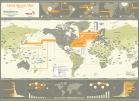 You knew all the freedoms we have enjoyed on the Internet could be threatened by big business eventually - well, that day is here.
Congress is now pushing a law that would end the free and open Internet as we know it, according to the team of people across the nation working to "Save the Internet." The SavetheInternet.com Coalition now has 524 member organizations, 637,386 petition signatures to Congress, 3,251 blog links, and 5,634 MySpace friends. Read the the Coalition's blogs.
Major national Internet providers are lobbying Congress hard to gut Network Neutrality, the Internet's First Amendment, and the key to Internet freedom. Net Neutrality prevents major providers from choosing which websites open most easily for you based on which site pays the companies more. We do not want one company to have to outbid another for the right to work more properly on your computer.
Many members of Congress take campaign contributions from these companies, and they don't think the regualr people are paying attention to this issue. Join with others to ensure Internet neutrality - you can sign a petition today.
Thursday, May 11, 2006
Llamas, camels, and caffeine
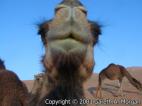 I love this story for several reasons - one because it is so visual and interesting, and also because it is hard to imagine trying to avoid caffeine. But here's a snapshot from a press release on Eurekalert:
Three llamas and two camels have provided a way to tell whether your waiter swapped regular coffee for decaf in your after-dinner cup. Using the heat-resistant antibodies these camels and llamas make, researchers at Washington University School of Medicine in St. Louis are developing a quick test for caffeine that works even with hot beverages.
The researchers plan to adapt their technology to a simple test ("dipstick") that can be used to check for caffeine in a variety of drinks. Their research is in the journal Analytical Chemistry.
"We believe our test would be the first consumer test for caffeine and would be beneficial for anyone wishing to avoid caffeine for health or personal reasons," says senior author Jack H. Ladenson.
Tuesday, May 09, 2006
Gore: save our planet
 I have to say that I respect Al Gore so much - and here is the latest in his effort on the global warming front:
He is helping to promote the documentary "An Inconvenient Truth." The film focuses on Gore's efforts to educate the public about global warming, an issue the former presidential candidate has spoken out on for years. The film shows photos of glaciers retreating and a host of charts and statistics chronicling the rise of water levels, worldwide temperatures and carbon dioxide levels, all symptoms of gradual warming of the earth, according to Gore.
Read the USA Today story.
Butterflies continue to face challenges
 This article is not saying anything about global warming, but my intel says that California's weather is directly related to global warming.
States a press release from UC Davis, "Cold, wet conditions early in the year mean that 2006 is shaping up as the worst year for California's butterflies in almost four decades, according to Art Shapiro, professor of evolution and ecology at UC Davis.
That's a turnaround from last spring, when millions of painted lady butterflies migrated through the Central Valley. But other species have seen steep declines in recent years and could disappear from the region altogether.
'It has been the worst spring for butterflies of my 35 in California,' Shapiro said. 'There will probably be long-term repercussions, especially for species already in serious decline.'
Shapiro said that at most of his study sites, he is seeing half or less than half the number of species present at this time in an average year, and far fewer individual butterflies than usual. For example, at Gates Canyon near Vacaville he counted 10 species and 43 individuals on April 18, 2006. At the same site on April 19, 2005, he counted 21 species and 378 butterflies.
This winter's weather conditions may have a lot to do with the drop in numbers. The early winter was mild, with not enough cold to end the winter dormancy or 'diapause' of most butterflies, so they did not emerge to take advantage of early warm weather in February. Then March turned cold and wet, wiping out the breeding of species that had emerged."
Tuesday, May 02, 2006
Internet neutrality issues surface
 A big issue on the horizon and getting a lot of attention is the concern for Internet neutrality or net neutrality. To understand the definition and the history and current congressional action, visit the Wikipedia.
States the Wikipedia entry on Net Neutrality: "By late 2005, network neutrality provisions were included in several Congressional draft bills, as a part of ongoing proposals to reform the Telecommunications Act of 1996. They would generally require internet providers to allow consumers access to any application, content, or service. However, important exceptions allow providers to discriminate for security purposes, or to offer specialized services like "broadband video" service.
On March 30, 2006 press release Rep. Fred Upton (Mich.) chaired a subcommittee hearing for a mark up of the Communications Opportunity, Promotion, and Efficiency Act of 2006 scheduled for April. Read more about the action in Congress in Business Week: "In a vote of 34 to 22, the House Committee on Energy & Commerce rejected an amendment to a sweeping telecommunications law, the Communications, Promotion, & Enhancement Act of 2006. The proposal, by Rep. Ed Markey (D-Mass.), would have given the Federal Communications Commission the power to prohibit discrimination when it comes to sending traffic over the Internet. In effect, the amendment would block the creation of a multilane "information highway," where network operators could give preference to their own content, or ensure speedier delivery to content providers that pay extra fees."
In April 2006 a large coalition of bi-partisan blogs and independent groups created Save The Internet, a fund-raising and political-action venue for endorsing the concepts of network neutrality. Within a week of its establishment, over 250 thousand signatures were delivered to Congress in favor of enshrining net neutrality as law."
Helping people understand this issue is going to take some time and effort - hope you will join the effort by joining Save The Internet.
Sunday, April 23, 2006
A constant of nature - can it change?
 This is an facinating story I could not resist because I am intrigued with physicists and their contemplations.
According to a story in New Scientist, "Cosmologists claim to have found evidence that yet another fundamental constant of nature, called mu, may have changed over the last 12 billion years. If confirmed, the result could force some physicists to radically rethink their theories. It would also provide support for string theory, which predicts extra spatial dimensions. This is not the first time fundamental constants have been accused of changing over the lifetime of the universe. Most famously, there was controversy over the fine structure constant, alpha (α), which governs how light and electrons interact. Some physicists claimed it is changing while others said it was not."
Saturday, April 22, 2006
Device allows man to fiddle with traffic lights
 This sounds like a something we would all love to do, but probably wouldn't.
According to an Associated Press story, "a man who said he bought a device that let him change traffic lights from red to green has received a $50 ticket on suspicion of interfering with a traffic signal."
The fellow given the ticket said that the device, which he bought on eBay for $100, helped him cut his time driving to work.
He used "a strobe-like device to change traffic signals because he said he ran late to the office frequently.
The AP continutes, "The device, called an Opticon, is similar to what firefighters use to change lights when they respond to emergencies. It emits an infrared pulse that receivers on the traffic lights pick up."
City traffic engineers noticed repeated traffic-light disruptions on certain intersections and noted the same vehicle when light patterns were disrupted.
Thursday, April 20, 2006
Cells talk in pairs - like people at the water cooler
 I can't help but admire the public relations/scientist team that came up with this description to help people better understand cell communication:
"When a group of people tries to decide how to carry out an important task, it is sometimes said that the pivotal discussions do not happen in large, well-attended meetings, but in one-on-one conversations around the water cooler. It turns out that among individual neurons in our brains, the same may hold true.
"Likening the process to the sort of casual conversations one might have at a cocktail party, William Bialek and his research team have found that retinal ganglion cells, the nerve cells along the back of our eyes that transmit visual signals to the brain, organize their actions based on communications they have with other individual cells rather than on group-style discussions. The findings, derived from experiments with and mathematical models of groups of 40 cells in the retinas of salamanders, could shed light on how brain cells work as a team."
Sunday, April 16, 2006
Robots in unpredictable environments
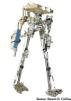 The National Academy of Sciences is holding a symposium with its annual meeting to discuss robot technology.
According to its web site, "As robot technology advances, we are approaching the day when robots will be deployed prevalently in uncontrolled, unpredictable environments: the proverbial 'real world.' As this happens, it will be essential for these robots to be able to adapt autonomously to their changing environment. This session will present three examples of machine learning on physical robots: Peter Stone of the University of Texas at Austin will present a machine-learning approach to legged locomotion, with all training done on the physical robots; Brian Scassellati of Yale University will present research on humanoid robots that learn to use normal social cues to interact with people; and Ayanna Howard of the Georgia Institute of Technology will present research that focuses on space robotics, in which robust operations must occur in environments that are unknown, unexpected, and uncertain.
For interesting reading about robot technology, go to the BBC's The World and Science Daily.
Wednesday, April 12, 2006
Bionic man merges biology and electronics
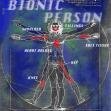 Recently at Experimental Biology 2006 some of the leading scientists in the rapidly expanding field of bionics explain how much of what was once fiction is today at least partial reality – including electronically-powered legs, arms, and eyes like those given TV’s Six Million Dollar Man 30-plus years ago.
The symposium on “The $6 Billion (Hu)Man” was part of the scientific program at the Experimental Biology 2006 meeting. Bionics, a word that merges biology with electronics, means replacing or enhancing anatomical structures or physiological processes with electronic or mechanical components Unlike prostheses, the bionic implant actually mimics the original function, sometimes surpassing the power of the original organ or other body part. Bionics takes place at the interface between bioengineering and anatomy.
Dr. William Craelius, Rutgers University, created the first multi-finger prosthesis, combining new understanding of musculoskeletal signaling with advances in human-to-machine communication. In recent years, prosthetic limbs have transformed from the unwieldy designs of the last century into more life-like limb substitutes that give users a more intuitive feel for their adopted limb. The bionic hand system (Dextra) produced by Dr. Craelius and his colleagues uses existing nerve pathways to control individual computer-driven mechanical fingers. Dextra consists of a standard plastic socket and silicone sensor sleeve that encases an amputee’s limb below the elbow. After a brief training period, operating the fingers is biomimetic, that is, it is done by normal volitional thinking, as if the user were commanding his natural fingers.
In Dr. Scott Delp’s Neuromuscular Biomechanics Laboratory at Stanford, digital humans walk across the computer screen, their visible musculoskeletal system revealing the complex interplay of muscles, bones, momentum and gravity that makes up human movement. A few alterations to the computer program that controls the form and function of these mechanisms, and the movements of the previously healthy, agile human on the screen change into those caused by neuromuscular disorders such as stroke, osteoarthritis, or Parkinson’s.
Dr. Homayoon Kazerooni, University of California, Berkeley, is the creator of BLEEX, a wearable robotic system that turns its wearer into a man or woman of incredible strength, able to carry up to 200 pounds with no more effort or strain than it would take to carry 10 pounds. Dr. Kazerooni started his work by understanding the human gait. Then, through the design of a novel actuation system, a network of sensors, a pair of computer controlled strap-on robotic legs, and an intelligent algorithm, he created the BLEEX to follow the wearer’s gait faithfully while carrying major loads. As the wearer walks and runs normally on ascending and descending slopes and stairs, the embedded sensors and computers in the robotic legs function like an extension of his or her own nervous system, gathering information on the direction being moved and continually redistributing the weight to make it feel like a barely perceptible burden.
Dr. Timothy Marler describes SantosTM, a new kind of complete whole-body virtual (computer-based) human model developed at the University of Iowa’s Virtual Soldier Research laboratory. Santos TM combines a highly realistic appearance, real-time simulations, and a relatively complex musculoskeletal structure. Because he will think, move, and act like a real human, he provides both an unique tool to scientists studying the human body and feedback to engineers who are designing and improving products. Unlike virtual mannequins, Santos actually predicts human motion and behavior based on human performance measures, such as energy, joint torque, or discomfort.
Cinnamon has health benefis
 Reported recently are two studies presented at Experimental Biology 2006: They provide new evidence for the beneficial effects (and biochemical actions) of cinnamon as an anti-inflammatory agent and support earlier findings of its power as an anti-oxidant agent and an agent able to lower cholesterol, triglycerides, and glucose, and improve how well insulin functions.
In a related study, extracts of cloves also were found to improve the function of insulin and to lower glucose, total cholesterol, LDL and triglycerides in people with type 2 diabetes. The studies were presented at Experimental Biology 2006 and provide the first evidence of these beneficial effects in humans taking the equivalent of one to two cloves per day.
Earlier studies by Dr. Richard A. Anderson, Beltsville Human Nutrition Research Center, United States Department of Agriculture, had shown that the equivalent of a quarter to half a teaspoon of cinnamon given to humans twice a day decreased risk factors for diabetes and cardiovascular disease, including glucose, cholesterol and triglycerides, by 10 to 30 percent. These new studies showing cinnamon’s ability to block inflammation extend our understanding of the potential for the spice, says Dr. Anderson.
As an anti-inflammatory agent, cinnamon may be useful in preventing or mitigating arthritis as well as cardiovascular disease. And as scientists increasingly understand the relationship between inflammation and insulin function in Alzheimer’s (causing some to refer to the neurodegenerative disease as “type 3 diabetes”), cinnamon’s ability to block inflammation and enhance insulin function may make it useful in combating that disease as well.
Dr. Heping Cao of the Beltsville Human Nutrition Research Center and colleagues, including Dr. Anderson, investigated the biochemical basis for the insulin-like effects of cinnamon. Results showed that cinnamon, like insulin, increases the amount of three critically important proteins involved in the body’s insulin signaling, glucose transport, and inflammatory response. Dr. Cao says the study provides new biochemical evidence for the beneficial effects of cinnamon in potentiating insulin action and suggests anti-inflammatory properties for the antioxidants in cinnamon.
Sunday, March 26, 2006
Green nanochemistry - have a look
 Chemistry is in the business of nanotechnology. Using principles of green chemistry, scientists are designing materials and processes that provide the maximum benefits of nanotechnology while minimizing potential hazards.
A Eurekalert press statement says that green nanochemistry is featured during a four-day symposium, "Nanotechnology and the Environment," at the 231st national meeting of the American Chemical Society. The symposium also will address applications of nanotechnology in medicine, electronics, and energy.
EPA scientist addresses “state of the science” of environmental nanotechnology —Barbara Karn, Ph.D., an environmental scientist with the U.S. Environmental Protection Agency’s National Center for Environmental Research, provides an overview of the current “state of the science” of environmental nanotechnology, including greener processes and new applications of green nanotechnology.
“Twelve Principles of Green Chemistry” — Paul T. Anastas, Ph.D., director of the ACS Green Chemistry Institute, will discuss how to use the Twelve Principles of Green Chemistry to design the next generation of nanomaterials and the transformations necessary to make them. The principles, which include the prevention of waste and the design and use of safer chemicals, are key to achieving genuine sustainability for the simultaneous benefit of the environment, economy and society, he says.
Surface chemistry called key to designing non-toxic nanomaterials — Surface chemistry, not size and shape, appears to be the key feature governing the biological activity of nanoparticles, says Vicki Colvin, Ph.D., director of the Center for Biological and Environmental Nanotechnology at Rice University in Houston. This finding is being used to guide the development of greener nanomaterials that are less likely to pose health and environmental risks, she says.
New water-soluble carbon nanotubes could lead to improved electronics, medicine — Researchers at the New Jersey Institute of Technology say they have developed a simple, quick method - using microwave energy - for developing highly water-soluble carbon nanotubes. Because the new nanotubes are up to 125 times more water soluble than other carbon nanotubes, they also are more functional for a wider variety of potential applications, including thin films, composites, faster computer chips and improved drug delivery, according to study leader Somenath Mitra, Ph.D.
Nanomaterials shine spotlight on cheaper, more efficient solar cells — A. Paul Alivisatos, Ph.D., co-editor of the ACS journal Nano Letters and a chemist at the University of California, Berkeley, will discuss recent efforts to develop improved solar cells using nanomaterials, which could lead to greener, cheaper and more efficient ways to generate electricity.
Fuel cells may get efficiency boost with nanomaterials - Joseph M. DeSimone, Ph.D., a chemist at the University of North Carolina in Chapel Hill, is developing new proton exchange membranes patterned at the nanoscale that could lead to better, more efficient fuel cells. The development also may allow methanol to be used directly as a fuel source instead of hydrogen, he says.
Nanosphere sensors used to detect hazardous materials — Researchers at Oklahoma State University in Stillwater have developed polymer nanospheres that can be used to detect hazardous materials in aquatic environments near parts per billion levels. The sensors, which change their shape and optical properties depending on the chemical that is present, can be read by optical spectroscopic techniques to identify the chemical, the researchers say.
This is a facinating topic with so much to explore - for science junkies, that is.
Friday, March 17, 2006
Clinical trials have some risk
ABC News reports today on a story in London: "Shortly after receiving an injection of a new experimental drug on Monday, six men in a research unit in London fell violently ill and developed multiple organ failure. Now, five days later, four of the men have regained consciousness, the BBC reports, while two are still under sedation in critical condition. Their harrowing experience - various reports indicate the men quickly swelled up, having undergone anaphylactic shock, or an extremely potent allergic reaction - is casting light on the clinical trial process, a system that has undeniably made important and frequent discoveries in medicine, but also creates unavoidable risks for the people who volunteer to be test subjects."
In the U.S. says ABC: "Unknown problems can arise at any step in this pipeline, researchers say, even when all the scientists involved try their very hardest to prevent any negative outcomes, said Dr. Ezekiel J. Emanuel, chair of the Department of Clinical Bioethics at the National Institutes of Health."
I am saddened for the families of the clinical trial patients - participants are our heroes when they go before us to try out drugs that we may someday benefit from having.
In the U.S. says ABC: "Unknown problems can arise at any step in this pipeline, researchers say, even when all the scientists involved try their very hardest to prevent any negative outcomes, said Dr. Ezekiel J. Emanuel, chair of the Department of Clinical Bioethics at the National Institutes of Health."
I am saddened for the families of the clinical trial patients - participants are our heroes when they go before us to try out drugs that we may someday benefit from having.
Subscribe to:
Posts (Atom)

