Friday, June 30, 2006

Buffett gives Gates Foundation his wealth

What can I say - this news [in the Washington Post] gives me chills - the good kind:

"Investment guru Warren Buffett, whose stake in the company he founded is worth $44 billion, disclosed plans to give nearly all of it away, mostly to the world's largest charitable organization, the Bill & Melinda Gates Foundation.

"That revelation in Fortune magazine comes on the heels of Microsoft Corp. co-founder Bill Gates's announcement earlier this month that he would transition from running his company to running his foundation - and marks a golden age for philanthropic giving akin to that of a century ago, when industrialists such as Andrew Carnegie, John D. Rockefeller and Andrew W. Mellon gave vast amounts of their wealth to the arts and society."

Saturday, June 24, 2006

Electric signals - no wiring

New findings suggest that magnetic fields created using nanotechnology could make computers up to 500 times more powerful, if new research is successful.

The University of Bath is to lead an international £555,000 three-year project to develop a system which could cut out the need for wiring to carry electric currents in silicon chips.

Computers double in power every 18 months or so as scientists and engineers develop ways to make silicon chips smaller. But in the next few years they will hit a limit imposed by the need to use electric wiring, which weakens signals sent between computer components at high speed.

The new research project could produce a way of carrying electric signal without the need for wiring. Wi fi internet systems and mobile phones use wireless technology now, but the electronics that create and use wireless signals are too large to be used within individual microchips successfully.

The research project, which involves four universities in the UK and a university and research centre in Belgium and France, will look at ways of producing microwave energy on a small scale by firing electrons into magnetic fields produced in semi-conductors that are only a few atoms wide and are layered with magnets.

The process, called inverse electron spin resonance, uses the magnetic field to deflect electrons and to modify their magnetic direction. This creates oscillations of the electrons which makes them produce microwave energy. This can then be used to broadcast electric signals in free space without the weakening caused by wires.

Saturday, June 10, 2006

Vaccine for cervical cancer: behind the scenes

I am intrigued by the presentation of this research in this press release on Eurekalert!

"Creation of a successful vaccine against cervical cancer, approved today by the U.S. Food and Drug Administration, is the culmination of research that occurred thanks not only to scientists and physicians, but also to generous farmers and veterinarians, priests and nuns willing to tell all – and some very patient cows. At the University of Rochester Medical Center, the initial research more than 20 years ago included visits to veterinarians and meat-packaging plants in Upstate New York to collect scrapings from "prized" cow warts, and surveys of people unlikely to be infected with a sexually transmitted disease – priests and nuns who had taken a vow of celibacy. The work with the cows, the warts, the nuns and the priests illustrates how basic research can pay off in big and unexpected ways.

Will scoring improve in World Cup with new ball?

I enjoyed the stories in the news about the new football that is being used in the World Cup, so I am posting a press release from the University of Bath.

"The new football that will be used for the first time in the World Cup’s opening game on Friday (9 June 2006) is likely to bamboozle goalkeepers at some stage of the tournament, a leading scientist has warned.

The Adidas ‘Teamgeist’ football has just 14 panels - with fewer seams - making its surface ‘smoother’ than conventional footballs which have a 26 or 32 panel hexagon-based pattern.

This makes it aerodynamically closer to a baseball and, when hit with a slow spin, will make the ball less stable, giving it a more unpredictable trajectory in flight.

“With a very low spin rate, which occasionally happens in football, the panel pattern can have a big influence on the trajectory of the ball and make it more unpredictable for a goalkeeper,” said Dr Ken Bray, a sports scientist at the University of Bath and author of the new popular science book How to score – science and the beautiful game.

“Because the Teamgeist ball has just 14 panels it is aerodynamically more similar to the baseball which only has two panels.

“In baseball, pitchers often throw a ’curve ball’ which is similar to a swerving free kick and the rotating seam disrupts the air flow around the ball in much the same way as a football does.
“Occasionally though, pitchers will throw a ’knuckleball’ which bobs about randomly in flight and is very disconcerting for batters.

“It happens because pitchers throw the ball with very little spin and as the ball rotates lazily in the air, the seam disrupts the air flow around the ball at certain points on the surface, causing an unpredictable deflection.

“With the world’s best players in Germany this summer, there are bound to be plenty of spectacular scoring free kicks.

“But watch the slow motion replays to spot the rare occasions where the ball produces little or no rotation and where goalkeepers will frantically attempt to keep up with the ball’s chaotic flight path.”

The ball, which has been used by teams competing in the World Cup in practice sessions, has already been criticised by England goalkeeper Paul Robinson and Germany goalkeeper Jens Lehmann for its light-weight and unpredictable behaviour.

Sunday, June 04, 2006

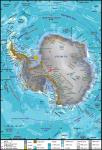
Crater beneath Antarctic linked to meteor

A new study press release planetary scientists have found evidence of a meteor impact much larger and earlier than the one that killed the dinosaurs - an impact that they believe caused the biggest mass extinction in Earth's history.

The 300-mile-wide crater lies hidden more than a mile beneath the East Antarctic Ice Sheet. And the gravity measurements that reveal its existence suggest that it could date back about 250 million years - the time of the Permian-Triassic extinction, when almost all animal life on Earth died out.

Its size and location - in the Wilkes Land region of East Antarctica, south of Australia - also suggest that it could have begun the breakup of the Gondwana supercontinent by creating the tectonic rift that pushed Australia northward.

Read more about this facinating discovery by Ohio State University researchers.

Saturday, June 03, 2006

Brain and computer chips advance

For the first time, scientists at the Max-Planck Institute for Biochemistry coupled living brain tissue to a chip equivalent to the chips that run computers, according to a report inJournal of Neurophysiology.

The scientists developed a revolutionary noninvasive technique that enables them to record neural communication between thousands of nervecells in the tissue of a brain slice with high spatial resolution. This technique involves culturing razor-thin slices of the hippocampus region on semiconductor chips.

The biophysicists were able to visualize the influence of pharmaceutical compounds on the neural network. This makes the “brain-chip” a novel test system for brain and drug research.

Saturday, May 27, 2006

Global warming getting attention

Watch the trailer for the new movie "An Inconvenient Truth," go to the movie, and decide for yourself if you want to make a commitment to addressing global warming. There are many ways to save the planet. Check out climatecrisis.net. Treehugger.com. EPA. Wikipedia on global warming. Global Warming.net. Watch global warming. New Scientist on climate change. Georgia Tech studies up.

Save the Internet: a bill for Network Neutrality

Today's news: A bipartisan majority on the House Judiciary Committee passed the "Internet Freedom and Nondiscrimination Act" - a good bill that would protect Network Neutrality and prohibit large phone and cable companies from turning the Internet into their private domain.
Yesterday's vote is a milestone in our campaign. It would have been unthinkable just four weeks ago - when we lost a vote on Net Neutrality in the House Energy and Commerce Committee.
In the weeks since that first vote, we have ignited a prairie fire across America. And Washington is beginning to feel the heat:

More than 700 groups from all 50 states are now a part of the SavetheInternet.com Coalition - a diverse list that includes MoveOn.org, the Christian Coalition, the Service Employees International Union (SEIU), Consumers Union and the American Library Association A-list musicians such as REM, Moby, The Roots and the Dixie Chicks have joined the coalition with many more to be announced soon.

Major U.S. newspapers have written editorials supporting our position. More than 5,000 bloggers have linked to the SavetheInternet.com Web site and blog - urging their readers to take action on this issue. And yesterday, the Coalition's petition drive surpassed 750,000 signatures. With little money and through the efforts of many, we have turned momentum against a handful of phone and cable giants that are spending untold millions of dollars to squash Internet freedom. But there is more work to do.

The full House will take up the bipartisan Judiciary bill in June. The Senate is also considering legislation that currently fails to protect Net Neutrality, though a bipartisan group of Senators are lining up behind an excellent bipartisan bill sponsored by Senators Olympia Snowe (R-Maine) and Byron Dorgan (D-North Dakota).

Stay tuned. Also read more on Wired - for an interesting story.

Thursday, May 25, 2006

MySpace meets Al Gore

According to Online Media Daily, former Vice President Al Gore and Paramount Classics today begin a broad partnership with MySpace to promote their climate change documentary, "An Inconvenient Truth."

"MySpace has a unique ability to mobilize its community around an urgent cause," Al Gore says.

MySpace's campaign for "An Inconvenient Truth" includes a custom-designed site where the community's more than 70 million registered members can meet and exchange ideas. Among other features, the page offers a "personal environmental impact calculator" for users to assess their personal contribution to global warming. The site also presents related facts and tips for reducing carbon emissions and living "green."

Wow - a fantastic use of MySpace!!

Wednesday, May 24, 2006

Points of light: gender and gait

Sometimes I like to comment on good writing in public relations for science, and this press release from Salk Institute captures my interest. Plus, the topic is intriguing and will make you think about your impressions of the gait of just about everyone you know!

It doesn't take John Wayne's deliberate, pigeon-toed swagger or Marilyn Monroe's famously wiggly sway to judge a person's gender based on the way they move. People are astonishingly accurate when asked to judge the gender of walking human figures, even when they are represented by 15 small dots of light attached to major joints of the body. And not only that, when human observers watched the walking motion of a male so-called "point light walker," they were more sensitive to the female attributes when watching the next figure in the sequence. This suggests that the human brain relies on specialized neurons that tell gender based on gait, report researchers at the Salk Institute for Biological Studies in the May 21 advance online edition of Nature Neuroscience.

Read more on Eurekalert.

Monday, May 22, 2006

Scientists' findings: levees during Katrina

Following an eight-month study of the New Orleans levee system and its performance during Hurricane Katrina, a 30-person team of researchers led by Raymond Seed and Robert Bea of the University of California, Berkeley, released a near-complete draft of their findings today in a "town hall" meeting in that Gulf Coast city.

Seed received two National Science Foundation grants to collect perishable data and to conduct an independent field investigation of the performance of the New Orleans levee systems with the intent the findings would prove vital for gauging the performance of levee systems distributed across the United States.

The levee study is one of more than 100 NSF supported in response to Hurricanes Katrina and Rita. For decades, the agency has supported field investigations following all manner of disasters, allowing researchers to travel the world to collect perishable data as soon as possible after an event. Read more.

Imagine whales on land - what once was

Researchers have revealed the genetic basis behind one of the best-documented examples of evolutionary change in the fossil record: how whales lost their hind limbs. Writing in this week's Proceedings of the National Academy of Sciences, scientists report that ancient whales - four-footed land animals not unlike large modern dogs - evolved into graceful, streamlined swimmers through a series of small genetic changes during the whales' embryonic development.

A gene called "Sonic Hedgehog," named by a creative scientist, was in effect between 41 million and 50 million years ago when whales' hind limbs shrank greatly as the former land animals began a return to the sea. But their legs showed no change in the basic arrangement and number of bones, which proved that Sonic Hedgehog was in effect. Read more great science findings at the National Science Foundation.

Senate bill aimed to protect Internet

Thanks goodness for the Snowe-Dorgan Bill, says Seana Mulcahy. It represents the "Internet Freedom Preservation Act of 2006.
This bipartisan bill was introduced in the Senate. Byron Dorgan (D-N.D.), Olympia Snowe (R-Maine). and Daniel Inouye (D-Hawaii). It aims to protect Network Neutrality. The bill defines the obligations of broadband providers in supplying the link between content providers and consumers. Read more on OnlineSpin.

Friday, May 12, 2006

Save the Internet campaign grows

You knew all the freedoms we have enjoyed on the Internet could be threatened by big business eventually - well, that day is here.

Congress is now pushing a law that would end the free and open Internet as we know it, according to the team of people across the nation working to "Save the Internet." The SavetheInternet.com Coalition now has 524 member organizations, 637,386 petition signatures to Congress, 3,251 blog links, and 5,634 MySpace friends. Read the the Coalition's blogs.

Major national Internet providers are lobbying Congress hard to gut Network Neutrality, the Internet's First Amendment, and the key to Internet freedom. Net Neutrality prevents major providers from choosing which websites open most easily for you based on which site pays the companies more. We do not want one company to have to outbid another for the right to work more properly on your computer.

Many members of Congress take campaign contributions from these companies, and they don't think the regualr people are paying attention to this issue. Join with others to ensure Internet neutrality - you can sign a petition today.

Thursday, May 11, 2006

Llamas, camels, and caffeine

I love this story for several reasons - one because it is so visual and interesting, and also because it is hard to imagine trying to avoid caffeine. But here's a snapshot from a press release on Eurekalert:

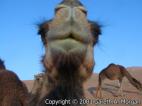
Three llamas and two camels have provided a way to tell whether your waiter swapped regular coffee for decaf in your after-dinner cup. Using the heat-resistant antibodies these camels and llamas make, researchers at Washington University School of Medicine in St. Louis are developing a quick test for caffeine that works even with hot beverages.

The researchers plan to adapt their technology to a simple test ("dipstick") that can be used to check for caffeine in a variety of drinks. Their research is in the journal Analytical Chemistry.

"We believe our test would be the first consumer test for caffeine and would be beneficial for anyone wishing to avoid caffeine for health or personal reasons," says senior author Jack H. Ladenson.

Tuesday, May 09, 2006

Gore: save our planet

I have to say that I respect Al Gore so much - and here is the latest in his effort on the global warming front:

He is helping to promote the documentary "An Inconvenient Truth." The film focuses on Gore's efforts to educate the public about global warming, an issue the former presidential candidate has spoken out on for years. The film shows photos of glaciers retreating and a host of charts and statistics chronicling the rise of water levels, worldwide temperatures and carbon dioxide levels, all symptoms of gradual warming of the earth, according to Gore.

Read the USA Today story.

Butterflies continue to face challenges

This article is not saying anything about global warming, but my intel says that California's weather is directly related to global warming.

States a press release from UC Davis, "Cold, wet conditions early in the year mean that 2006 is shaping up as the worst year for California's butterflies in almost four decades, according to Art Shapiro, professor of evolution and ecology at UC Davis.

That's a turnaround from last spring, when millions of painted lady butterflies migrated through the Central Valley. But other species have seen steep declines in recent years and could disappear from the region altogether.

'It has been the worst spring for butterflies of my 35 in California,' Shapiro said. 'There will probably be long-term repercussions, especially for species already in serious decline.'

Shapiro said that at most of his study sites, he is seeing half or less than half the number of species present at this time in an average year, and far fewer individual butterflies than usual. For example, at Gates Canyon near Vacaville he counted 10 species and 43 individuals on April 18, 2006. At the same site on April 19, 2005, he counted 21 species and 378 butterflies.

This winter's weather conditions may have a lot to do with the drop in numbers. The early winter was mild, with not enough cold to end the winter dormancy or 'diapause' of most butterflies, so they did not emerge to take advantage of early warm weather in February. Then March turned cold and wet, wiping out the breeding of species that had emerged."

Tuesday, May 02, 2006

Internet neutrality issues surface

A big issue on the horizon and getting a lot of attention is the concern for Internet neutrality or net neutrality. To understand the definition and the history and current congressional action, visit the Wikipedia.

States the Wikipedia entry on Net Neutrality: "By late 2005, network neutrality provisions were included in several Congressional draft bills, as a part of ongoing proposals to reform the Telecommunications Act of 1996. They would generally require internet providers to allow consumers access to any application, content, or service. However, important exceptions allow providers to discriminate for security purposes, or to offer specialized services like "broadband video" service.

On March 30, 2006 press release Rep. Fred Upton (Mich.) chaired a subcommittee hearing for a mark up of the Communications Opportunity, Promotion, and Efficiency Act of 2006 scheduled for April. Read more about the action in Congress in Business Week: "In a vote of 34 to 22, the House Committee on Energy & Commerce rejected an amendment to a sweeping telecommunications law, the Communications, Promotion, & Enhancement Act of 2006. The proposal, by Rep. Ed Markey (D-Mass.), would have given the Federal Communications Commission the power to prohibit discrimination when it comes to sending traffic over the Internet. In effect, the amendment would block the creation of a multilane "information highway," where network operators could give preference to their own content, or ensure speedier delivery to content providers that pay extra fees."

In April 2006 a large coalition of bi-partisan blogs and independent groups created Save The Internet, a fund-raising and political-action venue for endorsing the concepts of network neutrality. Within a week of its establishment, over 250 thousand signatures were delivered to Congress in favor of enshrining net neutrality as law."

Helping people understand this issue is going to take some time and effort - hope you will join the effort by joining Save The Internet.

Sunday, April 23, 2006

A constant of nature - can it change?

This is an facinating story I could not resist because I am intrigued with physicists and their contemplations.

According to a story in New Scientist, "Cosmologists claim to have found evidence that yet another fundamental constant of nature, called mu, may have changed over the last 12 billion years. If confirmed, the result could force some physicists to radically rethink their theories. It would also provide support for string theory, which predicts extra spatial dimensions. This is not the first time fundamental constants have been accused of changing over the lifetime of the universe. Most famously, there was controversy over the fine structure constant, alpha (α), which governs how light and electrons interact. Some physicists claimed it is changing while others said it was not."

Saturday, April 22, 2006

Device allows man to fiddle with traffic lights

This sounds like a something we would all love to do, but probably wouldn't.

According to an Associated Press story, "a man who said he bought a device that let him change traffic lights from red to green has received a $50 ticket on suspicion of interfering with a traffic signal."

The fellow given the ticket said that the device, which he bought on eBay for $100, helped him cut his time driving to work.

He used "a strobe-like device to change traffic signals because he said he ran late to the office frequently.

The AP continutes, "The device, called an Opticon, is similar to what firefighters use to change lights when they respond to emergencies. It emits an infrared pulse that receivers on the traffic lights pick up."

City traffic engineers noticed repeated traffic-light disruptions on certain intersections and noted the same vehicle when light patterns were disrupted.