Monday, December 18, 2006

Solar outburst aggravates global systems

A press release this week says that a solar outburst, which can play havoc with global positioning systems and cell phone reception, bombarded Earth, Dec. 6, 2006, with a record amount of radio noise. Dale Gary, who just confirmed the news, is a professor and chair of the department of physics at New Jersey Institute of Technology.

"Reports of significant events worldwide are still coming in as late as yesterday afternoon," said Gary. Due to a computer software failure, initial research reports in the U.S. downplayed the outbursts.

"The odd thing about this outburst was that the Sun is supposed to be at the minimum phase of its 11-year cycle," said Gary. "Nevertheless, the disruption lasted more than an hour, produced a record amount of radio noise, and caused massive disruptions of Global Positioning Satellite (GPS) receivers world wide."

Sunday, November 19, 2006

Nanoparticles get drugs closer to the problem

Scientific American has covered the latest advance with nanoparticles for brain tumors. Researchers at the University of Michigan have tested a drug delivery system that involves drug-toting nanoparticles and a guiding peptide to target cancerous cells in the brain.

This study finds that using the nanoparticles the drug can be delivered to a tumor's general vicinity [reported in Clinical Cancer Research]. The researchers used a pharmaceutical called Photofrin, which is photodynamic, meaning it is activated by a laser after it has entered the bloodstream. This new system, which uses intravenous delivery of 40-nanometer-wide particles to carry the drug, may actually avoid much of the unwanted photosensitivity, because less Photofrin circulates in the bloodstream.
It also avoided crossing the blood-brain barrier, which keeps many substances from entering the brain from the bloodstream.

Sunday, November 05, 2006

Go to flickr for a great fall sky photo

There is a beautiful fall sky photo on flickr today, and other gorgeous fall photos, but they are copyrighted so I am sending you there to view them!

sky photo

Mercury eclipses the sun on Nov. 8

This kind of story makes me want to be a space scientist every time - I am either channeling an astrophysicist or just want to be one in my next life!

According to a press statement, "When Mercury goes in front of the Sun on Wednesday, Nov. 8, a rare event, scientists from Williams College and the University of Arizona will be observing it from vantage points on earthbound mountains and with orbiting spacecraft. Among planets, only Mercury and Venus can go in transit across the face of the Sun, as seen from the Earth, since they are the only planets whose orbits are inside that of Earth's. Transits of Mercury occur a dozen times a century, most recently in 2003. The next won't occur until 2016."

Background includes, "Scientists have already used the 1999 transit of Mercury to unravel a centuries-old mystery known as the black-drop effect. (Their analysis was published in the journal Icarus and in the proceedings of an International Astronomical Union symposium on the transit of Venus.) This blurring of the distinction between a planet's silhouette and the edge of the Sun prevented accurate knowledge of the size of the solar system for hundreds of years. It had been seen at the very rare transits of Venus, which occur in pairs separated by over a century, and often falsely attributed to Venus's atmosphere. Pasachoff and Schneider, on the other hand, by observing and explaining a black-drop effect at a transit of Mercury observed from NASA's TRACE spacecraft, showed that no atmosphere was necessary, since Mercury's atmosphere is negligible and the spacecraft was outside Earth's atmosphere."

See more: NASA Eclipse Page and Transit of Venus Page

Thursday, October 19, 2006

Parkinson's may include problems with touch

News from an Emory University press release says that although Parkinson's disease is most commonly viewed as a "movement disorder," scientists have found that the disease also causes widespread abnormalities in touch and vision.

Scientists studying Parkinson's disease previously have focused on the brain's motor and premotor cortex, but not the somatosensory or the visual cortex. But Emory neurologist Krish Sathian had earlier discovered, through tests of tactile ability, that these patients have sensory problems with touch.

Dr. Sathian believes the study shows that the traditional boundaries between brain systems involved in touch and vision, and between those involved in sensation and movement, are artificial constructs that break down with more in-depth study. From a practical standpoint, it shows that patients with PD and other movement disorders have considerable problems in addition to movement control.

Sunday, October 08, 2006

Scientific American Mind covers innovation

In a new report in Scientific American Mind, writers Guenther Knoblich and Michael Oellinger cover "The Eureka Moment." They pose, .... "people who possess the least possible knowledge are in the best position to crack the case. And, ... "Yet although knowledge and experience in the problem area are indispensable, they can be a hindrance if they become so fixed that they block new ideas."

Read more by going to Scientific American Mind online, but you will need to buy a subscription to read the whole article - the publication is worth much more than the low price.

Hubble finds 16 extrasolar planet candidates

I am intrigued by adventures and discovery in space, and this story attracted me. As I may have mentioned before, I hope to be an astrophysicist in my next life.

The European Space Agency says in a recent press release, "The NASA/ESA Hubble Space Telescope has discovered 16 extrasolar planet candidates that are orbiting a variety of distant stars. In accomplishing this, Hubble looked farther into our Milky Way galaxy than has ever successfully been done before in searching for extrasolar planets.

The Hubble observations reach all the way into the central bulge of our galaxy, 26,000 light-years away, or one-quarter the diameter of the Milky Way’s spiral disk.

This tally is consistent with the number of planets expected to be uncovered from such a distant survey, based on previous exoplanet detections made in our local solar neighbourhood that only encompasses six percent of the Milky Way’s disk.

Tuesday, September 26, 2006

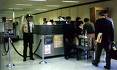
Study looks at security wait time in airports

I like how we study everything in the US with big studies at universities. Here is a study on security wait time in airports - seems mundane at first, but has some interesting facts including some socioeconomic factors.

A press release from Purdue says the "new study finds that people are willing to endure the wait for airport security screening, especially if delays are consistent among airports and at different times of day.

Findings also show that preferences vary between men and women, travelers in different income groups and other categories.

'The most fundamental finding was that wait time is important, but not the only major factor determining how well airline customers tolerate airport-security screening procedures,' said Fred Mannering, a professor of civil engineering at Purdue University. 'Another important finding is that passengers are more likely to be satisfied if wait times are consistent from airport to airport and at different times of day at the same airport.'

A paper detailing findings from the study appear in the Journal of Air Transportation Management.

The researchers used mathematical formulas in a "multinomial logit model" to calculate various probabilities based on data collected in national surveys. The surveys polled 828 air travelers in 2002 and 1,079 in 2003, after which the surveys were discontinued. The data were collected as part of the Omnibus Household Surveys, conducted every two months from January 2002 through October 2003 by the U.S. Bureau of Transportation Statistics.

The new study, however, suggests that travelers be surveyed annually because customer preferences may vary drastically from year to year.

Some specific probabilities detailed in the research paper regarding 2003 survey results showed that:

• Men were 3.9 percent less likely than women to be satisfied with the speed of airport-security screening;
• Passengers with a four-year college degree or a master's degree were 23 percent more likely to be satisfied;
• People earning more than $75,000 per year were 5 percent more likely to be satisfied; and
• Customers indicating that they were reluctant to travel after the Sept. 11 terrorist attacks were 17.9 percent less likely to be satisfied."

Saturday, September 09, 2006

Cancer genetic discovery breaks new ground

It is only a matter of time until genetic discoveries help in the prevention of disease - predictive health.

According to a study published in Science and covered by Healthday, researchers have sequenced the genetic "blueprints" of two major cancer killers - breast and colon cancer.

Identifying nearly 200 genes thought responsible for these diseases, the work gives researchers new insight into these malignancies and lays the foundation for the gene-targeted therapies that may one day cure them."Only by understanding this blueprint of cancer will we be fully able to understand the mechanism of what makes a cancer a cancer and to think about strategies for diagnosis, prevention and therapy," explained Dr. Victor Velculescu at Johns Hopkins University's Kimmel Cancer Center.

Just as the human body has its genetic code, so, too, do cancer cells. "Work from the past two decades has shown us that cancer is a genetic disease," said Velculescu.

He explained that a malignancy occurs when specific genes in healthy cells undergo unhealthy mutations. He says that the research approach holds great promise for providing an understanding of the genomic contributions to cancer. A mutation is really like a typo in a blueprint that's 3 billion letters long, according to the researcher.

Velculescu's team outlined the findings in the Sept. 8 issue of the journal Science.

A new $100 million federal initiative, The Cancer Genome Atlas project, seeks to change all that by mapping the myriad genetic "typos" that cause specific tumor types to form. The project described in Science is the first major step in that effort, according to the Healthday coverage.

Sunday, September 03, 2006

Berlin at night


Take a look at photos from flickr: Berlin at night.

Thursday, August 31, 2006

Orange juice for health

Sometimes people chuckle over the simplicity of a study the federal government supports, but when you think about this finding it really supports empowering individuals to manage their health.

Researchers, using a grant from the National Institutes of Health [does not look like the orange juice industry was behind this from what I can tell], found that a daily glass of orange juice can help prevent the recurrence of kidney stones better than other citrus fruit juices such as lemonade.

The findings indicate that although many people assume that all citrus fruit juices help prevent the formation of kidney stones, not all have the same effect. The study can be found in Clinical Journal of the American Society of Nephrology.

Press materials say that medically managing recurrent kidney stones requires dietary and lifestyle changes as well as treatment such as the addition of potassium citrate, which has been shown to lower the rate of new stone formation in patients with kidney stones.

Because some patients cannot tolerate potassium citrate because of gastrointestinal side effects, and in those cases, dietary sources of citrate, such as orange juice, may be considered as an alternative to pharmacological drugs.

Friday, August 25, 2006

Earth keeps balanced as weight changes

This captured my imagination, so I am sharing it with you!

Imagine a shift in the Earth so profound that it could force our entire planet to spin on its side after a few million years, tilting it so far that Alaska would sit at the equator. Princeton scientists have now provided the first compelling evidence that this kind of major shift may have happened in our world's distant past.

By analyzing the magnetic composition of ancient sediments found in the remote Norwegian archipelago of Svalbard, Princeton has lent credence to a 140-year-old theory regarding the way the Earth might restore its own balance if an unequal distribution of weight ever developed in its interior or on its surface. Read more.

Monday, August 21, 2006

Marker signals whether chemo helps or not

Back to blogging about medical discovery... today researchers are gaining more information on specific cancers, and with this breast cancer finding doctors can better determine how to effectively treat women with chemotherapy.

According to a press release for a study reported in Cancer Research, about half of women whose breast cancer is treated with standard chemotherapy have their cancer return within five years. Most chemotherapeutic drugs have undesirable side effects, but there has been no way to predict who would benefit and who wouldn't. Fortunately, new research findings at the University of Southern California could change that. Researchers at the USC/Norris Comprehensive Cancer Center have discovered a new biological marker in tumors that can help indicate whether a woman's breast cancer will respond to the most commonly prescribed chemotherapy drugs.

Thursday, August 03, 2006

One more to take your breath away


powertothepixel

Maybe it is because I want to float...


Here you go - still pointing to some intriguing photography - I keep coming back to antimethod.

Wednesday, August 02, 2006

Open-source science - can you dig it?

According to a story from Chemical and Engineering News, "Scientists from Sydney to San Francisco have created an online research collaboration to develop cures for tropical diseases, using the 'open source' programming model that produced freeware like Linux and Firefox, the award-winning Web browser.

The motivation is straightforward: Tropical diseases are low priority for big pharma because the return on drug development is so small. Patients in developing nations just don't have the financial ability to pay for patented drugs.

The structure is radical: Online discussions will prioritize a list of experiments that anyone can take on. Raw data will be posted online and discussed. Members of the consortium will solicit further ideas and expertise, hoping the greater research community steps up to the plate.

The group, which operates under an umbrella website called Synaptic Leap, hopes that volunteered time, computer power, and reagents will eventually result in a portfolio of drug leads that will be made freely available for development. Currently, members of Synaptic Leap are describing projects online and asking others for help and advice.

Participants in open-source collaborations give up their ability to patent discoveries by definition, because their data are public as soon as they are posted. But some argue that when it comes to neglected diseases, there's nothing to lose, because there was never any income to gain."

Sunday, July 30, 2006

Looking at beauty in the city at night


Okay - so this is off the medical beat, but I am so enamored of the beautiful photography on flickr ... here is Kayode Okeyode with some London photos.

Tuesday, July 25, 2006

Photos of the earth

To view beautiful photographs of our earth - go to tricky (sovietyuk).

Saturday, July 22, 2006

A fun experiment with water bed testing

Watch this hilarious video on Google videos - the water bed.

Thursday, July 20, 2006

Does BMI really count for all?

This is the kind of report that you want to say "of course I pretty much figured this" - this is something intuitive.

For years doctors have used the body mass index (BMI), a ratio of height and weight, to characterize the clinical weight status of their patients. The lower the number, the presumption goes, the leaner the person, and anyone with a BMI above 30 is characterized as obese and at high risk for the associated complications.

But the BMI has come under scrutiny lately, and other techniques that measure how the weight is distributed on the body are thought to provide a better way to assess risk. Now a study in mice by scientists at The Jackson Laboratory indicates that the usefulness of the BMI is suspect even at the genetic level.

In research published in PLoS Genetics, researchers used a combination of computational, molecular, and genetic tools to identify locations on the mouse genome that influence adiposity (amount of body fat), overall body size and bone structure. Applying an analytical technique called "structural equation modeling" to the genetic and physical characteristics of mouse inbred crosses, the scientists went beyond the one-gene, one-trait approach to reveal the networks of effects created by the influence of multiple genes.

The scientists say they found strong evidence that a high weight is not necessarily directly associated with a high percentage of fat.

At the clinical level, the research suggests that more refined measurements are needed to distinguish individuals with a large body mass from those who are truly obese.