Sunday, January 29, 2006

Magnetic fridge snags innovation prize

The Swiss want to be sure they are recognized for their innovation, so they have started an awards program. This week the "inventors of an environmentally friendly magnetic fridge won top prize where scientists used existing magnetic technology to create a household fridge that does not emit harmful hydro-carbons into the atmosphere. On display was the hydrogen-powered PAC Car II, designed by the Federal Institute of Technology in Zurich, that smashed a world record by completing the 25-kilometre Shell Eco Marathon on one gram of hydrogen last year. Other innovative designs included an intelligent hearing aid that filters out background noise, a robotic walking aid to help neck injury victims get back on their feet, and a display from the makers of Team Alinghi's America's Cup winning yacht.

Innovation is certainly the buzzward of the 21st Century!

Monday, January 23, 2006

Biobank takes blood for major gene study

Moving back to the brave new world of medicine, an interesting feature in New Scientist starts with, "You might donate blood to help save someone's life. But would you donate your blood, your DNA, and your most intimate medical secrets on a promise that it may help save a life years from now?"

Reporter Andy Coghlan writes, "Half a million people will be expected to do just that in the coming months, with another half a million people to follow, as two huge medical research projects get under way in the UK and US. The British project, called Biobank, is due to start within weeks, after five years of preparation. The American project, announced in 2004 by the National Human Genome Research Institute in Bethesda, Maryland, is still at the planning stage."

Both of the projects will obtain information that will allow scientists to study extensively how our genes and environment interact over the years to cause disease. That could one day lead to new treatments for cancer and heart disease, among other diseases. The article says, "But the projects are not without their critics, who say they could produce misleading results and raise fundamental questions about who should own our medical details and have access to them. These details not only document our medical past, but might also reveal which medical conditions we and our relatives are likely to suffer from in the future."

Despite such misgivings, the organizers of the two projects are banking on finding hundreds of thousands of volunteers for each project. In the US, participants will be given the option of being told about findings that affect their health, such as whether they are unknowingly developing cancer or carrying HIV. Biobank, however, has decided not to give out such information. It states that it does not want volunteers to be penalized by insurance companies.

Saturday, January 21, 2006

Dark matter and Pioneer's anomaly

This really does not mean anything to me in everyday terms, but it is fun to stretch the mind to fathom some things....

According to Phys.org a new study examines "galaxy rotation curves without exotic dark matter and seeks to describe a modified Newtonian acceleration law derived from a relativistic modification of Einstein’s gravitational theory. Found in the Astrophysical Journal, the study, “Galaxy Rotation Curves Without Non-Baryonic Dark Matter,” may one day help to explain the Pioneer 10 - 11 spacecraft anomaly. The two space probes, launched in 1972 and 1973 respectively, are now at the edge of the solar system on trajectories that cannot yet be fully explained based on what is known about Newtonian and Einstein gravity.

Don't you find it amazing that a space probe launched in 1972 and in 1973 are still on their way somewhere?

Dig a little in and read the Space Today summary on Pioneer 10 - 11!

Comments from PhysOrg:

"I like the idea that maybe there is no dark matter. I always found objection to placing such importance on a unverifiable theory. If this matter emits absolutely no form of radiation, how can we ever find it? The equations claim that it is necessary, but it is entirely possible that the equations are wrong. However, there is one troublesome issue for me when considering that dark matter may not exist. Without such hidden matter, there is no way that the galaxy will ever collapse back upon itself. It seems that the cyclic nature of the universe, on all levels, demands that the universe collapse upon itself and blow up all over again. The idea that eventually there will be zero energy just doesn't seem right. As the Notorious B.I.G once said "Keep [big] Bangin'"

-and-

The Big Bang/Crunch, and zero energy universal "endings" are not the only theories out there that explain possibilities for the nature of the universe. They are the most well known, particularly the former which is taught to schoolchildren as "the way things are", but neither is necessarily true. Consider that with each new discovery in space science, our very timid and grasping understanding of our cosmic environment grows, and several new theories of planet, star and galactic formation spring up frequently....

Tuesday, January 17, 2006

Pollen transporters on the decline

This is part of my watch on the earth's future.

The prestigious Proceedings of the National Academy of Sciences press statement says, "In biodiversity hot spots like tropical rainforests, a dearth of pollinators could be putting many species at risk of extinction, according to a new study that includes three University of Pittsburgh researchers. The finding is raising concerns that more may need to be done to protect the Earth's most biologically rich areas.

Concerns include: "As the number of birds, bees, and other pollen transporters declines around the world, competition for their attention is becoming increasingly fierce for plants that need their services for reproduction - to the point where species in the most fertile areas of the world are struggling for survival. 'Pollinators are on the decline globally because of habitat loss and destruction, pesticide use, invasive species, and extinction of vertebrates,' says Tia-Lynn Ashman."

Thursday, January 12, 2006

Managing potential nanotechnology risks

Information Week covers a report that says controling the adverse enviromental effects of nanotechnology will be difficult under existing U.S. regulations and may require new laws to manage potential risks, a new study warns.

According to the report released by the Woodrow Wilson International Center for Scholars, the authors acknowledge that little is known about the possible adverse effects of nanotechnology. J. Clarence Davies, nevertheless stressed that a new regulatory regime is needed before nano-devices can be released into the environment. "We know enough to recognize that there needs to be some type of governmental oversight to ensure that public health and safety are not adversely affected," the Project on Emerging Technologies report warns.

Thursday, December 29, 2005

Words to love

I love words. An easy way to learn a new word each day is to sign up for Word of the Day on Google's new personalized home page. Here are some words from the past week. It would be great to hear these words used more often in our day-to-day speech, or at least see them in an email or two:

digerati: persons knowledgeable about computers. confrere: a colleague, comrade, or intimate associate. querulous: habitually complaining; also, expressing complaint. vociferous: clamorous; noisy. firmament: the sky; the heavens. jollification: merrymaking; revelry. benefaction: the act of conferring a benefit; also, a benefit conferred. apposite: of striking appropriateness and relevance. cynosure: a center of attention.

Wednesday, December 28, 2005

Electromagnetic waves = fast minus circuitry

If you are trying to imagine just how fast information will move in the future, check this out:

Georgia Tech [this is one awesome place] says, "By using electromagnetic waves instead of electrical current for switching, researchers have operated an optical modulator at terahertz frequencies – an accomplishment that could one day facilitate data transmission rates in the trillions of bits per second.

To gain those higher rates, researchers at GT and at the University of California, Santa Barbara and the NASA Ames Research Center "used very high-frequency waves from a free-electron laser to control the modulator. These electromagnetic waves consist of an oscillating electric field and have the advantage of being able to move through free space without the need for circuitry."

This is some cool finding - and the work represents a key step toward a new generation of optical communication systems that would be as much as 100 times faster than current technology. For more information, visit physorg.com.

Nanotechnology supervised

Recent nanotechnology conversations point to understanding what happens to nano materials when used in the human body.

Now, scientists at Northwestern University have "devised a noninvasive method of imaging these nanostructured materials within the body, providing a way of tracking the fate of these materials in a living organism. These researchers have been developing a toolbox of synthetic amino acids (related to building blocks of proteins) that assemble themselves into complex structures that may prove useful in drug delivery and tissue engineering applications. To learn more, visit nanotechnology.com.

In addition, watchdog Pew Charitable Trusts recently launched "Project on Emerging Nanotechnologies at the Woodrow Wilson International Center for Scholars to ensure that the federal government and the private sector address the potential human health and environmental risks as well as the benefits of emerging nanotechnologies. The project works with industry, the government, and the scientific and public interest communities to identify gaps in nanotechnology risk-assessment research and oversight and to develop strategies to address them." To learn more, visit Pew Charitable Trusts.

Tuesday, December 20, 2005

Intelligent design violates Constitution

Here's one for science:

A report on CNN says, "Pennsylvania school district cannot teach in science classes a concept that says some aspects of science were created by a supernatural being, a federal judge has ruled. In an opinion issued Tuesday, US District Judge John Jones ruled that teaching "intelligent design" would violate the Constitutional separation of church and state. 'We have concluded that it is not [science], and moreover that ID cannot uncouple itself from its creationist, and thus religious, antecedents,' Jones writes in his 139-page opinion posted on the court's Web site. 'To be sure, Darwin's theory of evolution is imperfect. However, the fact that a scientific theory cannot yet render an explanation on every point should not be used as a pretext to thrust an untestable alternative hypothesis grounded in religion into the science classroom or to misrepresent well-established scientific propositions,' Jones writes.
Intelligent design claims the complexity of some systems of nature cannot be explained by evolution but must be attributed to a designer or supernatural being."

That's all, just the judge on this one.

Sunday, December 18, 2005

Evo devo - mutations, passive evolution benefits

Taking a look at genetics topics today, and I am intrigued by what scientists are intrigued by and what gets them going - so here is some news that excites some geneticists.

According to a news release from Georgia Tech, biologists there have "provided scientific support for a controversial hypothesis that has divided the fields of evolutionary genomics and evolutionary developmental biology, popularly known as 'evo devo," for two years. Appearing in Trends in Genetics, researchers find that the size and complexity of a species’ genome is not an evolutionary adaptation per se, but can result as simply a consequence of a reduction in a species’ effective population size."

Scientists Soojin Yi says, “The interesting thing here is that biological complexity may passively evolve. We show that at the origins, it’s not adaptive mutations, but slightly bad ones that make the genome larger. But if you have a large genome, there is more genetic material to play with to make something useful. At first, maybe these mutations aren’t so good for your genome, but as they accumulate and conditions change through evolution, they could become more complex and more beneficial.”

Scientist J. Todd Streelman says, “As a general rule, more complex organisms, like humans, have larger genomes than less complex ones. You might think this means that animals with the largest genomes are the most complex – and for the most part that would be right. But it’s not always true. There are some species of frogs and some amoeba that have much larger genomes than humans.”

Tuesday, December 13, 2005

Genome mapping leads to atlas for cancer

A lot of work went into mapping the human genome, and now an ambitious team of scientists will take this knowledge and apply it to new cancer discoveries.

The National Cancer Institute and the National Human Genome Research Institute today launched a comprehensive effort to accelerate the understanding of the molecular basis of cancer through the application of genome analysis technologies, especially large-scale genome sequencing. The overall effort, called The Cancer Genome Atlas, will begin with a pilot project to determine the feasibility of a full-scale effort to systematically explore the universe of genomic changes involved in all types of human cancer.

According to National Intitutes of Health Director Elias A. Zerhouni, “This atlas of genomic changes will provide new insights into the biological basis of cancer, which in turn will lead to new tests to detect cancer in its early, most treatable stages; new therapies to target cancer at its most vulnerable points; and, ultimately, new strategies to prevent cancer.” Find the government's news release at the NIH web site.

Monday, December 12, 2005

Dust-speck size container delivers drugs

Back to the topic of small delivery channels for medical purposes.

A Eurekalert press release from Johns Hopkins says researchers have "devised a self-assembling cube-shaped perforated container, no larger than a dust speck, that could serve as a delivery system for medications and cell therapy." The researchers report in Biomedical Microdevices that "the relatively inexpensive microcontainers can be mass-produced through a process that mixes electronic chip-making techniques with basic chemistry. Because of their metallic nature, the cubic container's location in the body could easily be tracked by magnetic resonance imaging."

One Hopkins scientist says, "We're talking about an entirely new encapsulation and delivery device that could lead to a new generation of 'smart pills.' The long-term goal is to be able to implant a collection of these therapeutic containers directly at the site or an injury or an illness."

Check out this new nanotechnology advances of David Gracias' at his Hopkins web site.

Thursday, December 08, 2005

Blue Brain and the eServer Blue Gene

As I have mentioned before, researchers in Switzerland recently launched an ambitious project called Blue Brain, which uses IBM's eServer Blue Gene, a supercomputer capable of processing 22.8 trillion floating point operations per second (TFLOPS).

States the Computerworld article: The Blue Brain project is modeling the behavior of 10,000 highly complex neurons in rats' neocortical columns (NCC), which are very similar to the NCCs in a human brain. The NCCs run throughout the brain's gray matter and perform advanced computing. The first objective of Blue Brain is to build an accurate software replica, or template, of an NCC within two to three years.

What I find interesting is that the researchers say that "some major brain experiments could be done in silicon rather than in a "wet" lab. A simulation that might take seconds on the supercomputer could replace a full day's worth of lab research. Ultimately, simulated results of brain activity could be matched with recorded brain activity in a person with a disease in order to "reverse-engineer" the circuit changes in diseases. The real value of a simulation is that researchers can have access to data for every single neuron," IBM researcher say.

The future of acadmic medicine is anyone's guess - can these academics keep up with the new technoglogy available?

Wednesday, November 30, 2005

Electronic ink: packaging messages

I am intrigued by this technology and what it will look like in our everyday lives in the future. In a story in Fortune magazine:

"Digital paper has a long history of unfulfilled promise. But the wait for "electronic ink" may be coming to an end. E Ink, a spinout from MIT's Media Lab, announced in October that it has, together with LG Philips LCD, built a new flexible 10.1-inch display that is about the thickness of construction paper and has the resolution of a standard desktop monitor. Already last spring Microsoft used a color version of E Ink's technology to light up the packaging of Xbox game Jade Empire. Siemens is using an entirely different technology—electrochromatic polymers - a "wafer thin" color display that can deliver video, something the slightly higher-resolution E Ink technology can't yet manage. "I've gotten a lot of interest from advertising agencies," says Norbert Aschenbrenner of Siemens. So, long before Tolstoy fans get a one-page, foldable version of War and Peace, grocery shoppers should see Tony the Tiger waving madly at them from the Frosted Flakes box on aisle four. "

Sunday, November 27, 2005

Measurement nails greenhouse effect

I am back on the global warming beat with a new report from Science.

The new study states that global ocean levels are rising twice as fast today as they were 150 years ago, and human-induced warming appears to be the culprit.

While the speed at which the ocean is rising, almost two millimeters per year today compared to one millimeter annually for the past several thousand years, affirms scientific concerns of accelerated global warming, the scientists say.

The press release on Eurekalert says, Rutgers professor of geological sciences Kenneth G. Miller reports on a new record of sea level change during the past 100 million years based on drilling studies along the New Jersey coast. The findings establish a steady millimeter-per-year rise from 5,000 years ago until about 200 years ago. In contrast, sea-level measurements since 1850 from tidal gauges and more recently from satellite images, when corrected for land settling along the shoreline, reveal the current two-millimeter annual rise.

"Without reliable information on how sea levels had changed before we had our new measures, we couldn't be sure the current rate wasn't happening all along," says Miller. "Now, with solid historical data, we know it is definitely a recent phenomenon. The main thing that's changed since the 19th century and the beginning of modern observation has been the widespread increase in fossil fuel use and more greenhouse gases," he adds. "Our record therefore provides a new and reliable baseline to use in addressing global warming."

Monday, November 21, 2005

Sound and the modern hospital

Sometimes the obvious gets studied. This study's findings show that hospital noise levels have grown steadily over the past five decades, disturbing patients and staff members, raising the risk of medical errors and hindering efforts to modernize hospitals with speech recognition systems. Some studies even indicate that excessive noise can slow the pace of healing and contribute to stress and burnout among hospital workers.

Now that hospitals are competing for patients, they are looking for the competitive advantage. This means that a hospital that reduces its noise level may improve satisfaction and outcomes. Researchers say, "A noisy intensive care unit introduces patient, family and staff dissatisfaction. It has also been reported that noise can contribute to lapses in short-term memory, which could then introduce safety concerns. "

Check out the study by Johns Hopkins researchers and learn more about James West who "turned a tiny microphone into a very big career. The Hopkins research professor has already revolutionized the field of electroacoustics. Now he's setting his sights on medicine, the Internet, and beyond."

Saturday, November 12, 2005

What rats and humans have in common

I have reported scientific findings for quite some time, but I am always intrigued by how scientists extrapolate findings from mice and rats to humans.

Actually, these rodents are good models to study, but I love the reporting when when a new finding emerges, such as this one:

Scientists at McKnight Brain Institute of the University of Florida say (or at least their public relations reps say) "People don't have to run marathons to keep their brain cells in shape - regular, light activity may do the trick. In the first study to show that lifelong exercise decreases cellular aging in the brain, scientists say that moderately active rats have healthier DNA and more robust brain cells than their less active counterparts." In just one sentence we moved from rats to people - both with "regular, light activity" with improved brain cell activity.
The research was presented at the Society for Neuroscience's 35th annual meeting.

I do love this quote from one researcher: "The difference between humans and rats is that it isn't as easy to get humans to exercise. Put an exercise wheel in a rat cage and a rat will zoom around on that thing all the time, unless it's sleeping. But putting an exercise machine in your family room doesn't mean you're going to use it."

Monday, November 07, 2005

NCI uses nanotech to find molecular signatures

Everything is pointing to nanotechnology in medicine, including on the cancer front:

Wired Magazine covers nanotechnology and cancer. It states that "the National Cancer Institute, which recently announced two waves of funding for nanotech training and research, sees nanotechnology as vital to its stated goal of 'eliminating suffering and death from cancer by 2015.'"

Wired continues with, "The first cancer nanotech applications will likely involve detection. Nanoparticles could recognize cancer's molecular signatures, gathering the proteins produced by cancerous cells or signaling the presence of telltale genetic changes. Researchers have already used a protein called albumin -- considered a naturally occurring nanoparticle -- to detect proteins found in ovarian cancer tissue. Other nanoparticles could adhere to cancerous cells and, when viewed under a magnetic resonance imager or fluorescent light, reveal cancers now hidden to our eyes. How soon these cancer nanotechnologies will be commercially available is hard to guess. Though the NCI's Cancer Nanotechnology Plan calls for clinical trials on out-of-body applications within three years, and trials on in-body therapies and diagnostics within five years, researchers are cautious about promising too much."

Saturday, October 29, 2005

Brain's internal clocks and timing

Let's take a look at an interesting finding on the brain - from a new Nature Reviews Neuroscience article. This report gives new meaning to "internal clock!"

"The brain is a 'time machine,' say Duke neuroscientists Catalin Buhusi and Warren Meck. And understanding how the brain tracks time is essential to understanding all its functions. The brain's internal clocks coordinate a vast array of activities from communicating, to orchestrating movement, to getting food. Buhusi and Meck discuss the current state of understanding of one of the brain's most important, and mysterious, clocks - the one governing timing intervals in the seconds to minutes range. Such interval timing occupies the middle neurological ground between two other clocks - the circadian clock that operates over the 24-hour light-dark cycle, and the millisecond clock that is crucial for such functions as motor control and speech generation and recognition."

Meck says, "We're addressing two challenges. One is to find the molecular processes that underlie this internal clock. And the second challenge is to build more realistic models of how this timing process works, with constant, parallel input from throughout the brain." In these studies, the researchers say they "face the daunting process of trying to monitor the intricate swirling of neural activity throughout the entire brain."

Sunday, October 23, 2005

Nanotechnology and buckypaper

On the topic of nanotechnology, FSU researchers provide some fun facts below.

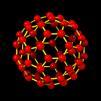
Among the possible uses for buckypaper that are being researched at FAC2T at FSU:

If exposed to an electric charge, buckypaper could be used to illuminate computer and television screens. It would be more energy-efficient, lighter, and would allow for a more uniform level of brightness than current cathode ray tube (CRT) and liquid crystal display (LCD) technology.

As one of the most thermally conductive materials known, buckypaper lends itself to the development of heat sinks that would allow computers and other electronic equipment to disperse heat more efficiently than is currently possible. This, in turn, could lead to even greater advances in electronic miniaturization.

Because it has an unusually high current-carrying capacity, a film made from buckypaper could be applied to the exteriors of airplanes. Lightning strikes then would flow around the plane and dissipate without causing damage.

Films also could protect electronic circuits and devices within airplanes from electromagnetic interference, which can damage equipment and alter settings. Similarly, such films could allow military aircraft to shield their electromagnetic "signatures," which can be detected via radar.