 Experimental Biology 2007 update:
New discoveries about the biochemical basis of the majority of cases of the congenital inability to smell any odor, no matter how strong, have enabled their discoverer, Dr. Robert I. Henkin, director of The Taste and Smell Clinic in Washington, DC, to treat such patients, enabling them to smell something for the first time in their lives.
These patients respond with amazement, Dr. Henkin told fellow scientists .
These patients respond with amazement, Dr. Henkin told fellow scientists .
“Until the treatment began to take effect, they had never experienced the olfactory world that surrounds us all, and it is with excitement that they quickly begin to learn what different things smell like and to relate those odors to objects they have known all their lives,” says Dr. Henkin.
His study is the first to characterize the biochemical abnormalities in these patients and the first to successfully treat patients using this new understanding. Dr. Henkin’s presentationwas part of The American Physiological Society.
In the United States alone, there are about 400,000 people who have never smelled anything in their lives. This does not include those who lose their once normal smell function because of illness or accident. A relatively small percentage - 12 percent - of individuals with congenital smell loss have multiple anatomical abnormalities of the brain and other organs. The vast majority - 88 percent - of individuals with congenital smell loss, however, do not have any such obvious organ abnormalities and their olfactory nerves and the brain regions that process olfactory information are intact.
Why, then, have they never been able to smell?
After determining the family of enzymes to which the growth and death factors belong and defining the biochemical pathway responsible for these factors, Dr. Henkin was able to treat these patients with PDE inhibitors that increase the concentration of growth factors and inhibit the secretion o death factors in nasal mucus. The treatment has been successful in restoring smell function in some of these patients, with the higher the dose and longer the use having the greatest effect.


 News from Experimental Biology 2007:
 More than 12,000 biological and biomedical scientists will gather for the Experimental Biology 2007 meeting at the Washington Convention Center, Washington, DC, April 28 through May 2.


 I have taken this from a press release on Eurekalert, issued by the University of Chicago - it was so interesting I am posting the whole release.
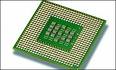 Business Week reports that computing took a leap forward when chipmakers started putting more than one core, or central brain, on a single chip.
 Is the universe actually made of information? I am taking the intro to this sub-section of Wired Magazine's wonderful section this month called "What we don't know" -




 Read on the
 A press release this week says that a solar outburst, which can play havoc with global positioning systems and cell phone reception, bombarded Earth, Dec. 6, 2006, with a record amount of radio noise. Dale Gary, who just confirmed the news, is a professor and chair of the department of physics at

